Why pressure washing shingles is the wrong answer
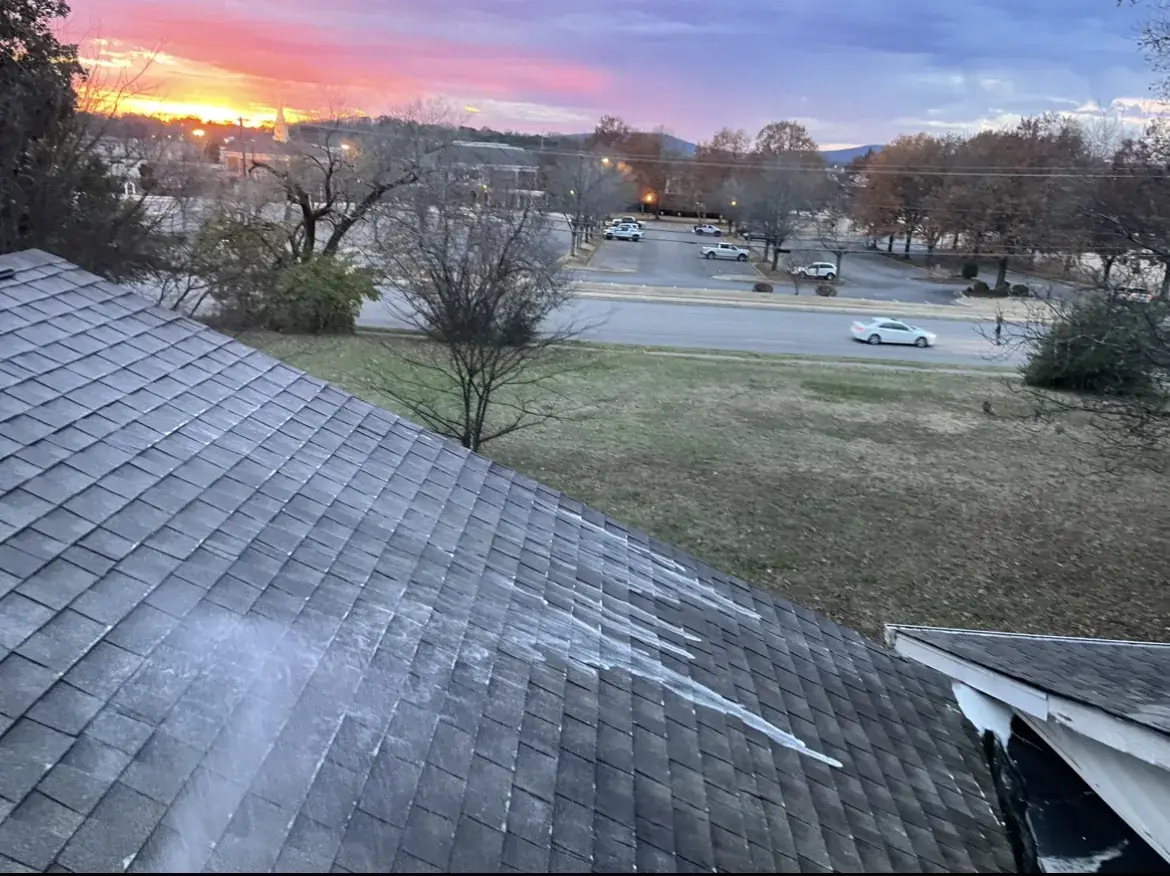
An asphalt shingle is a fiberglass mat saturated in asphalt and armored with ceramic-coated granules. Those granules are the shingle's UV protection and its fire rating. They are embedded, not glued on permanently, and they release under mechanical force. Put a pressure washer on a roof and granules come off in visible quantity — you can see them piled in the gutters and on the driveway afterward. The roof looks clean and has lost years of service life.
This is not a matter of opinion. The Asphalt Roofing Manufacturers Association's technical bulletin on algae discoloration calls for low-pressure chemical cleaning, and GAF's published guidance says the same: no pressure washing, use an appropriate cleaning solution applied at low pressure and rinse thoroughly. Manufacturers state plainly that damage from improper cleaning is not covered. If a company shows up with a surface cleaner or a rotary tip for your roof, they are handing you a warranty problem and a re-roof timeline.
High pressure also drives water where a roof is designed to shed it. Shingles overlap to move water downhill; force water uphill under a course and it reaches the decking, the underlayment seams and the nail penetrations. Around ridge vents, pipe boots and step flashing, that means interior leaks that show up weeks later with no obvious cause.
What gloeocapsa magma actually is
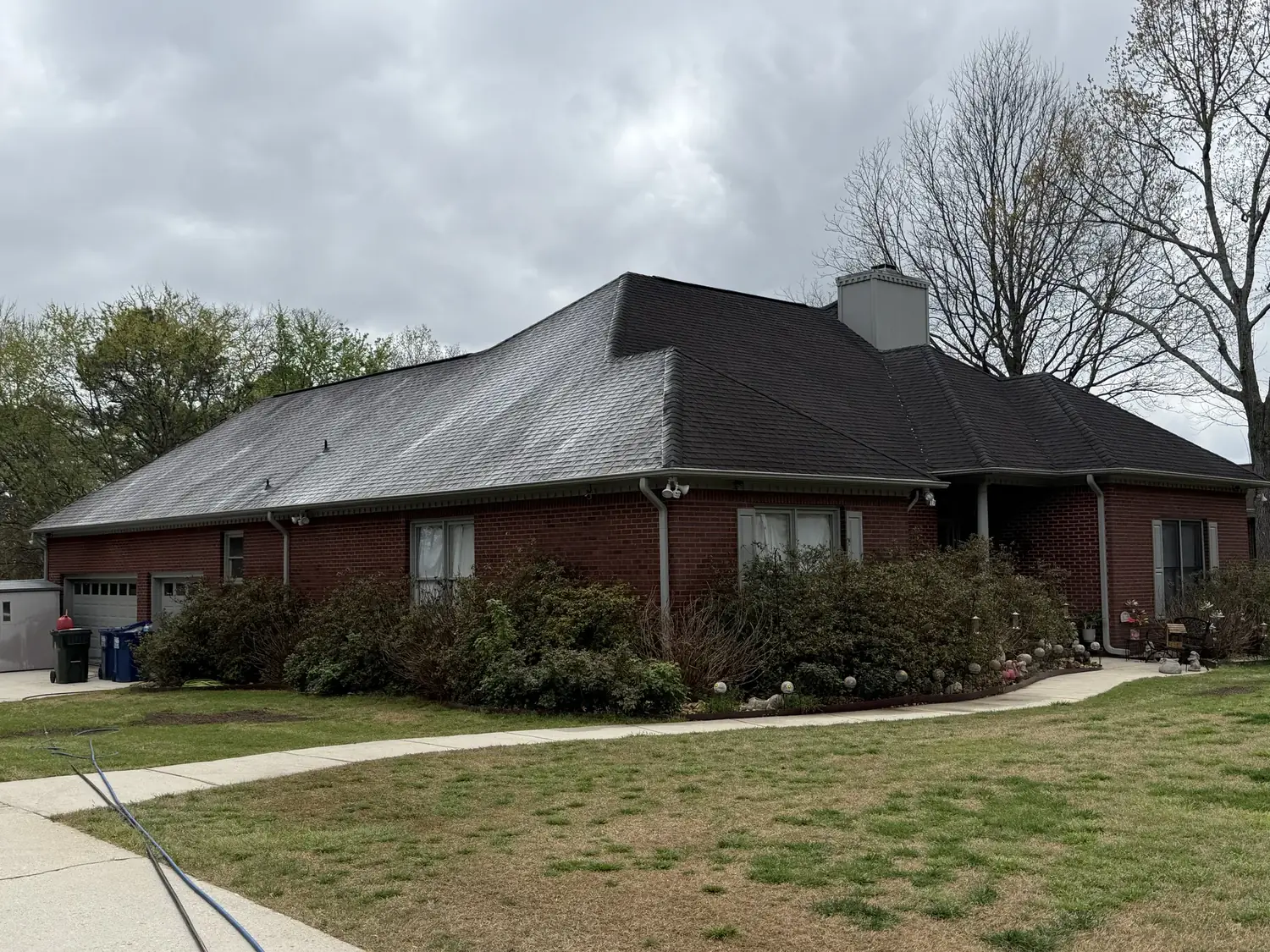
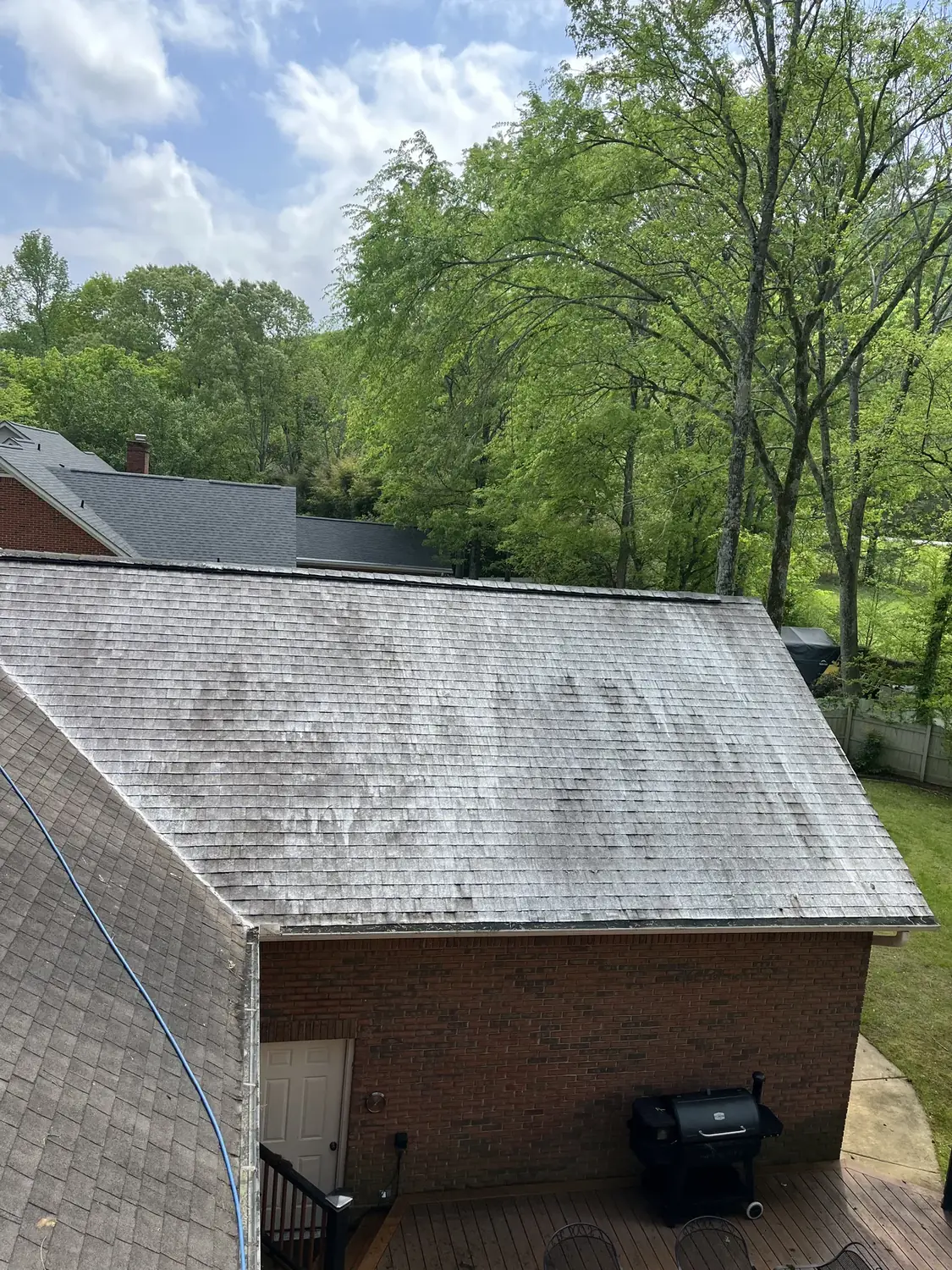
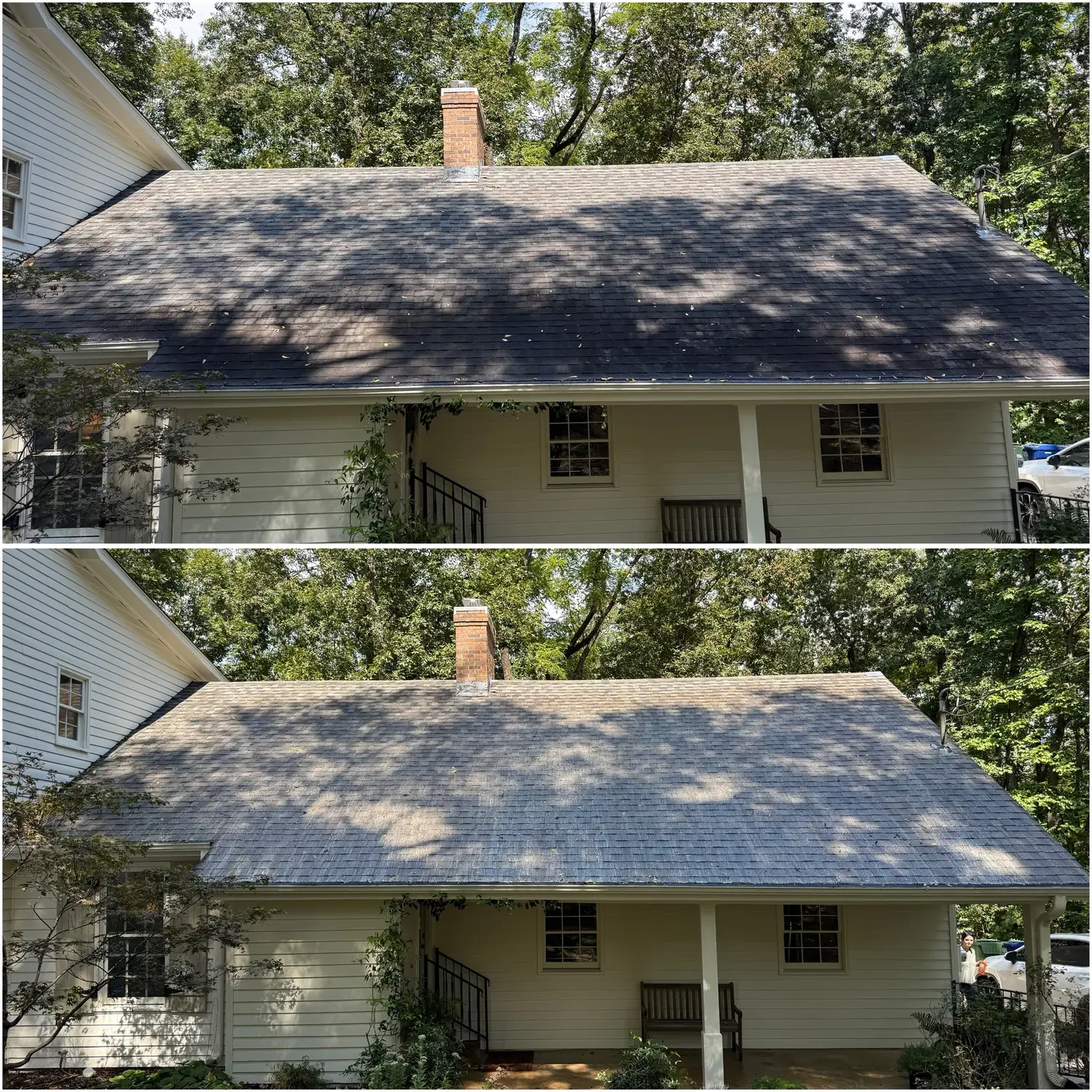
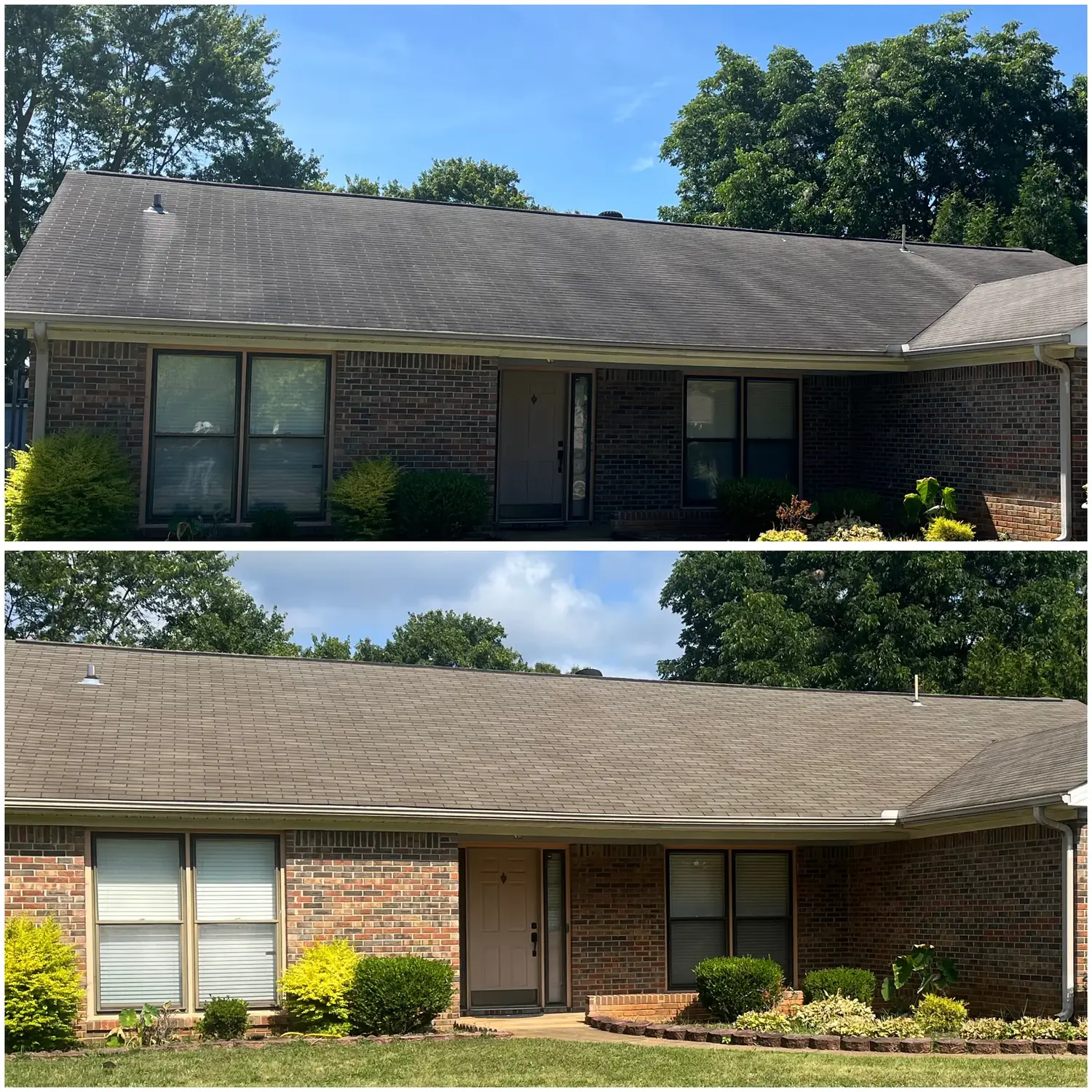
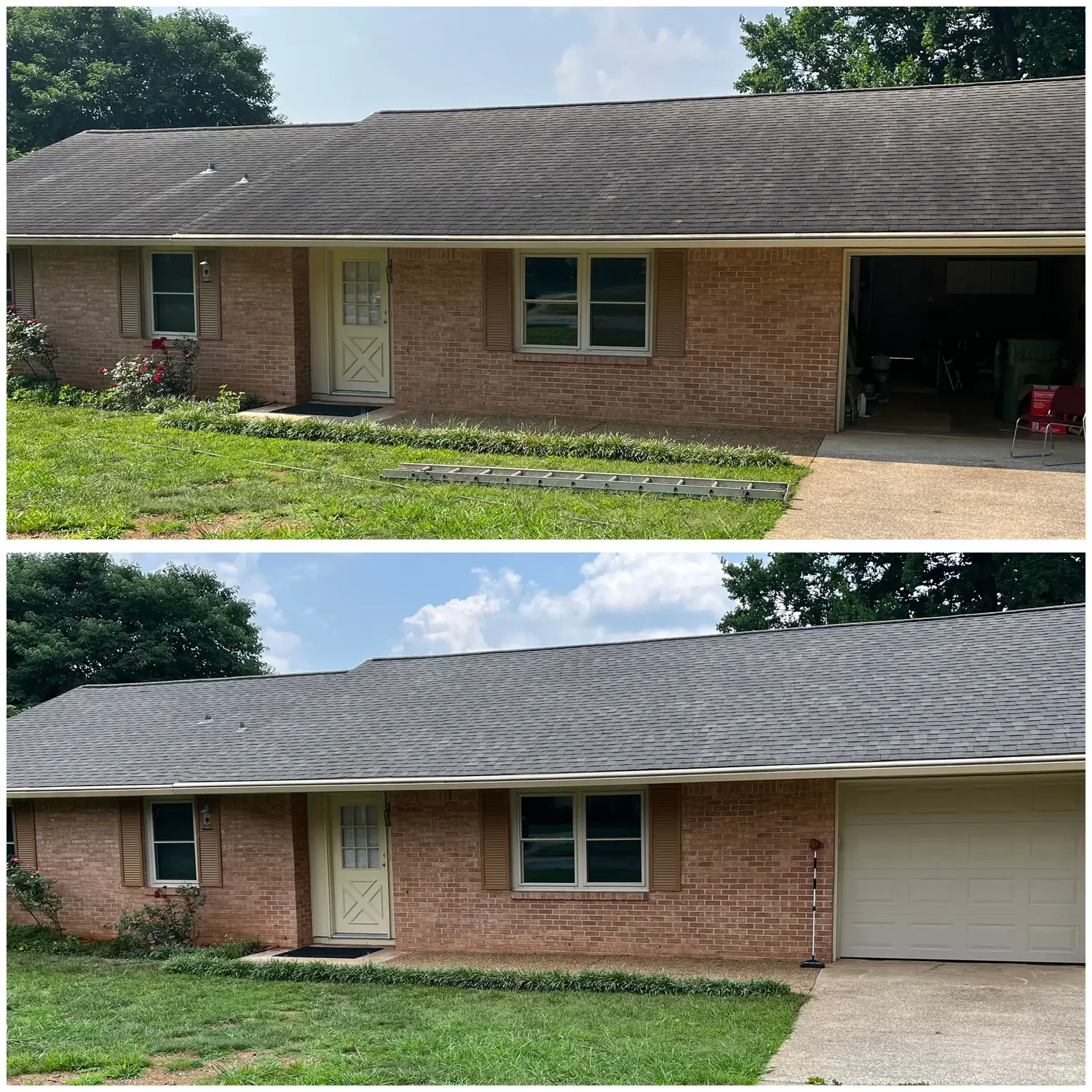
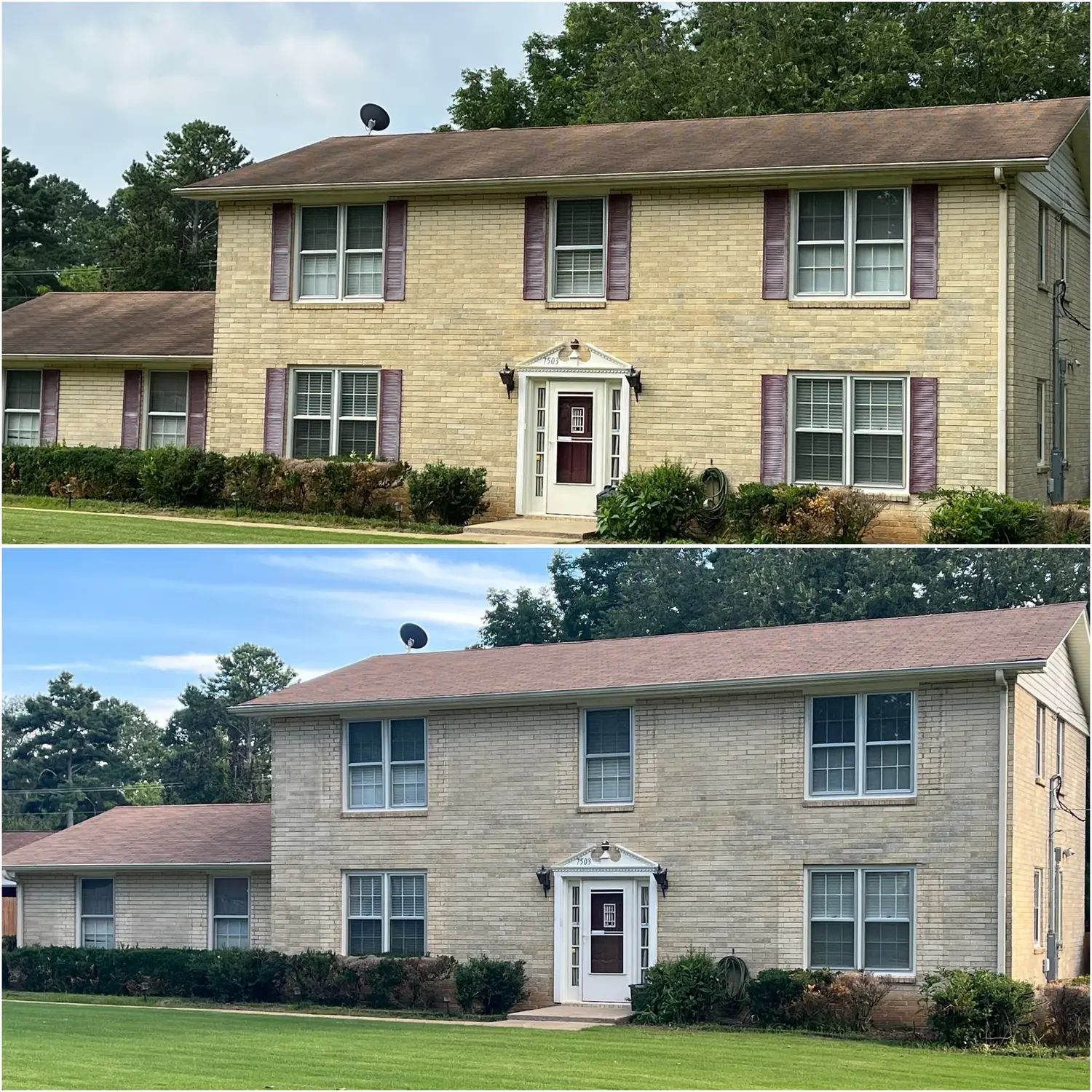
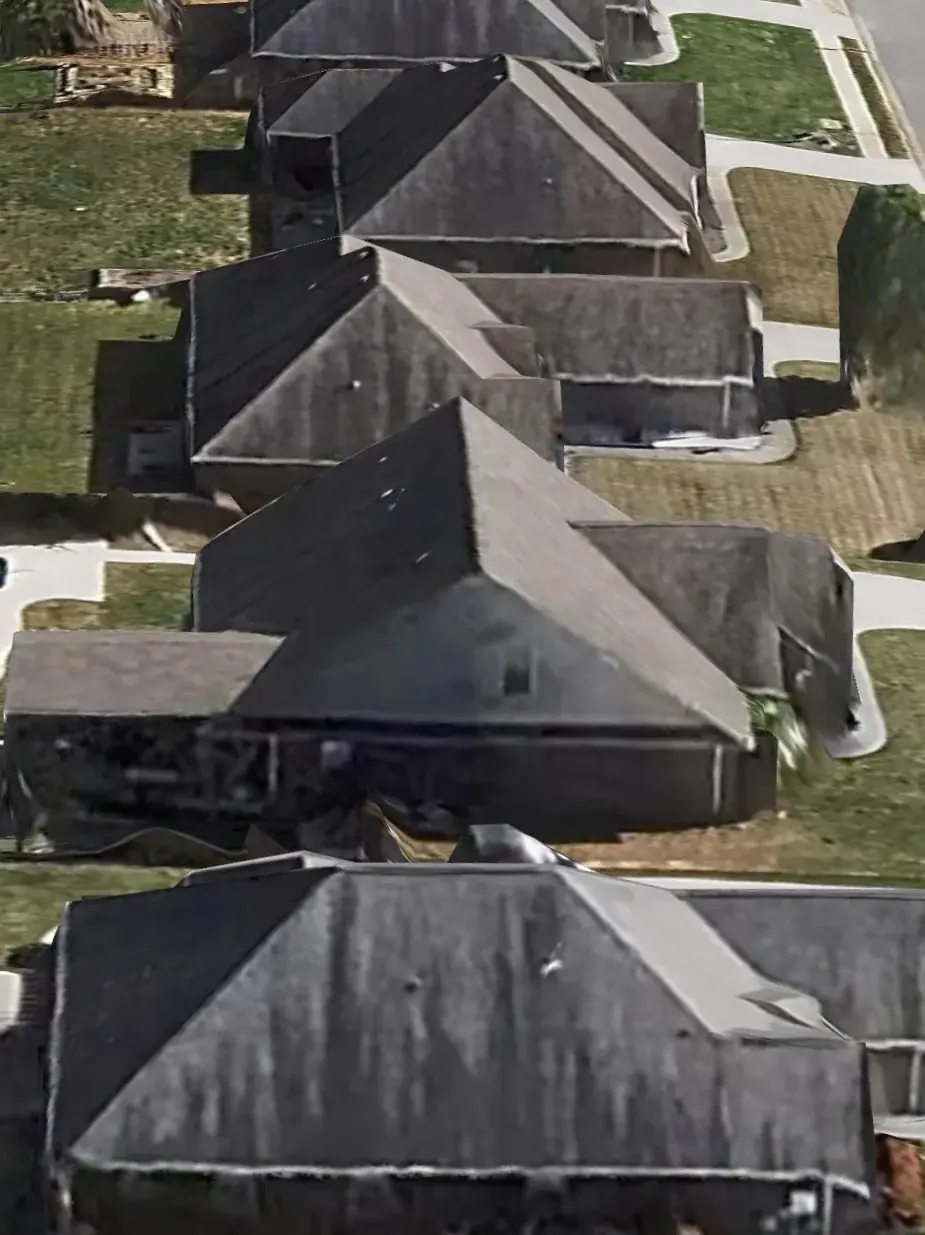
The black streaking on Huntsville roofs is Gloeocapsa magma, a cyanobacteria with a dark protective sheath. It feeds on the limestone filler used in asphalt shingle manufacturing, which is why modern architectural shingles are more susceptible than older products. It colonizes the ridge first, where spores land and moisture collects, then spreads downhill in the runoff pattern — hence streaks that always run vertically down the slope rather than in patches.
North-facing planes get hit hardest because they hold dew longest and get the least drying sun. Overhanging hardwoods make it worse by shading the surface and dropping organic debris the colony can feed on. Neighborhoods where several roofs are already colonized see faster recontamination because spores travel on wind and rain.
It is not cosmetic. The dark sheath absorbs heat and raises attic temperatures, and the mat holds moisture against the shingle surface between rains. Left long enough, lichen establishes on top of it, and lichen roots into the asphalt itself — at that point removal is possible but some pitting will remain. Cleaning at the algae stage is far cheaper than cleaning at the lichen stage.
What a proper soft wash treatment does
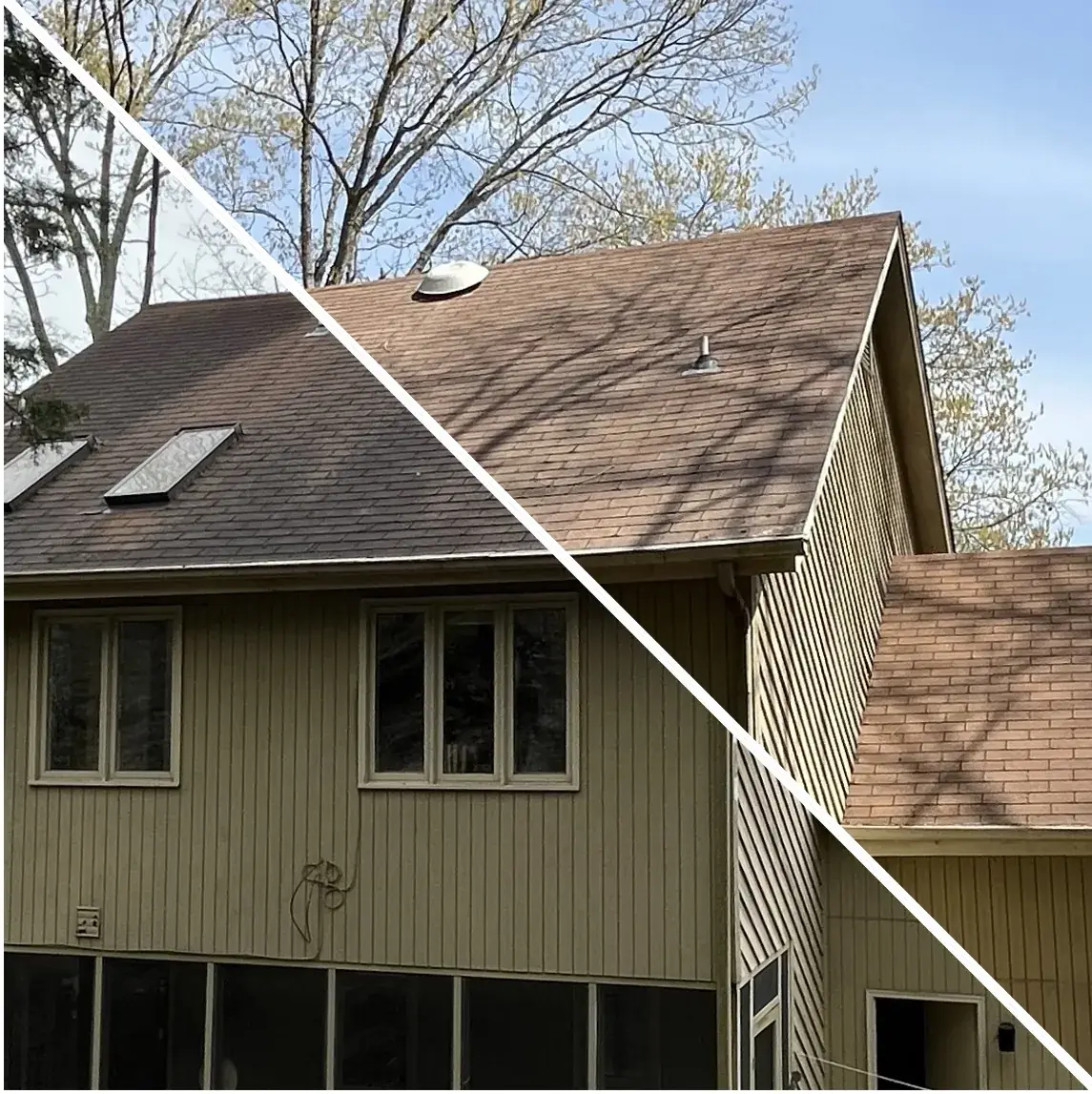
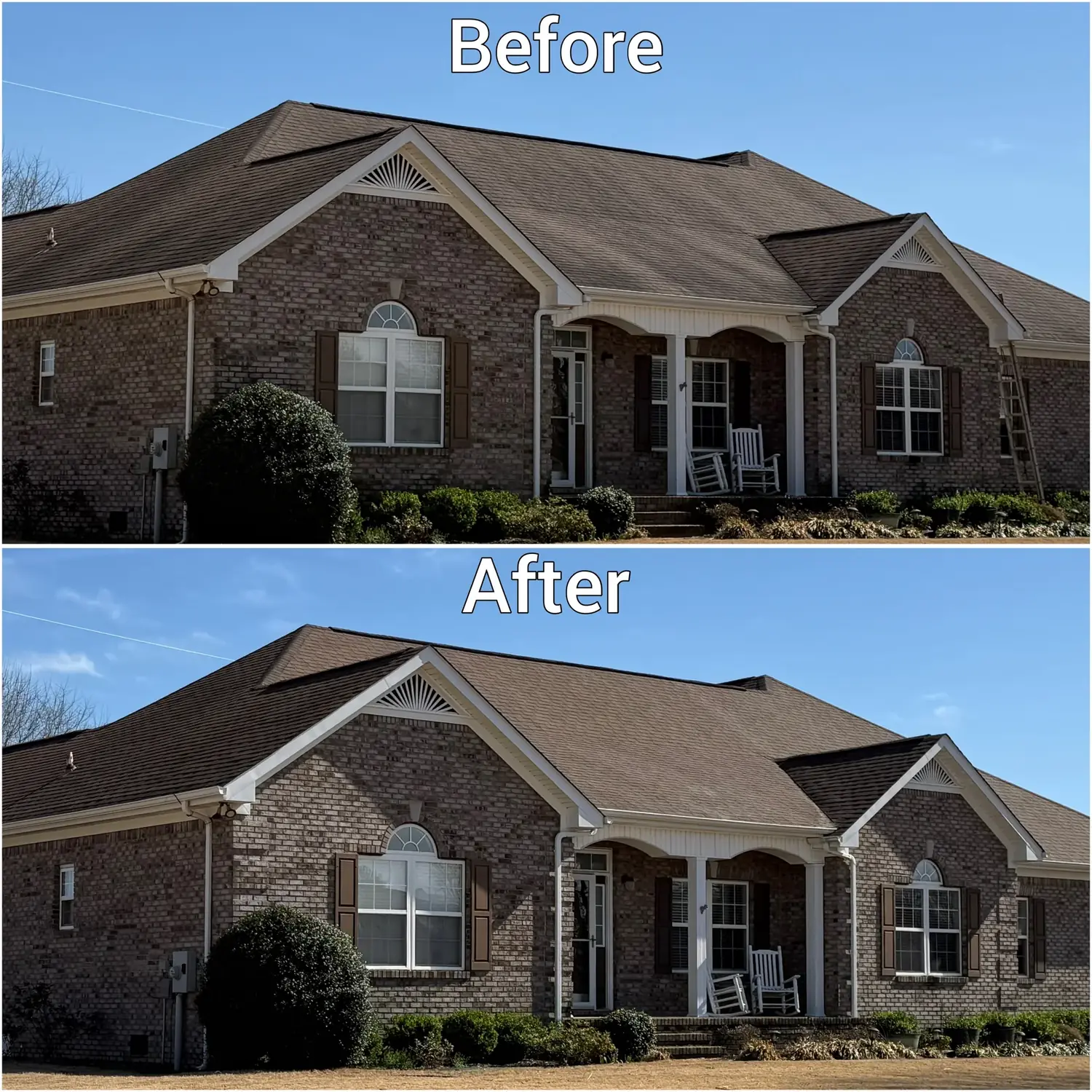
We apply a metered sodium hypochlorite solution with a surfactant package at low pressure across the entire roof plane, ridge to eave, including the areas that only look lightly affected. The solution kills the organism outright — this is not bleaching the color out, it is killing the colony so it cannot regrow from surviving roots. Dwell time is monitored, then the roof is rinsed at low pressure and everything below it is flushed.
Even coverage is the difference between a job that lasts and one that streaks back in a year. Partial application leaves living colonies that re-spread down-slope, so the roof develops new streaks in exactly the pattern the previous cleaning missed. Valleys, ridge caps, dormer cheeks and the shaded plane behind chimneys get the same attention as the front elevation nobody can miss.
Expect three to five years of clear roof in most Huntsville conditions. Heavy tree cover or persistent shade shortens it. For homes with chronic conditions, a lighter maintenance treatment on a set interval costs less than repeated full restorations.
Safety, access and insurance
Roof work is the highest-risk service on this site, and the risk is why the price is not the same as a driveway. We are licensed and insured [POLICY DETAILS AVAILABLE ON REQUEST], and we work from ladders and safe access points rather than walking steep planes unnecessarily — minimizing foot traffic protects both the crew and the shingles, which are most fragile in cold weather and most vulnerable to scuffing in high heat.
Ask any roof cleaning company for a certificate of insurance before they climb. An uninsured injury on your property becomes your problem, and an uninsured mistake on your roof becomes your repair bill.
Free drone inspection
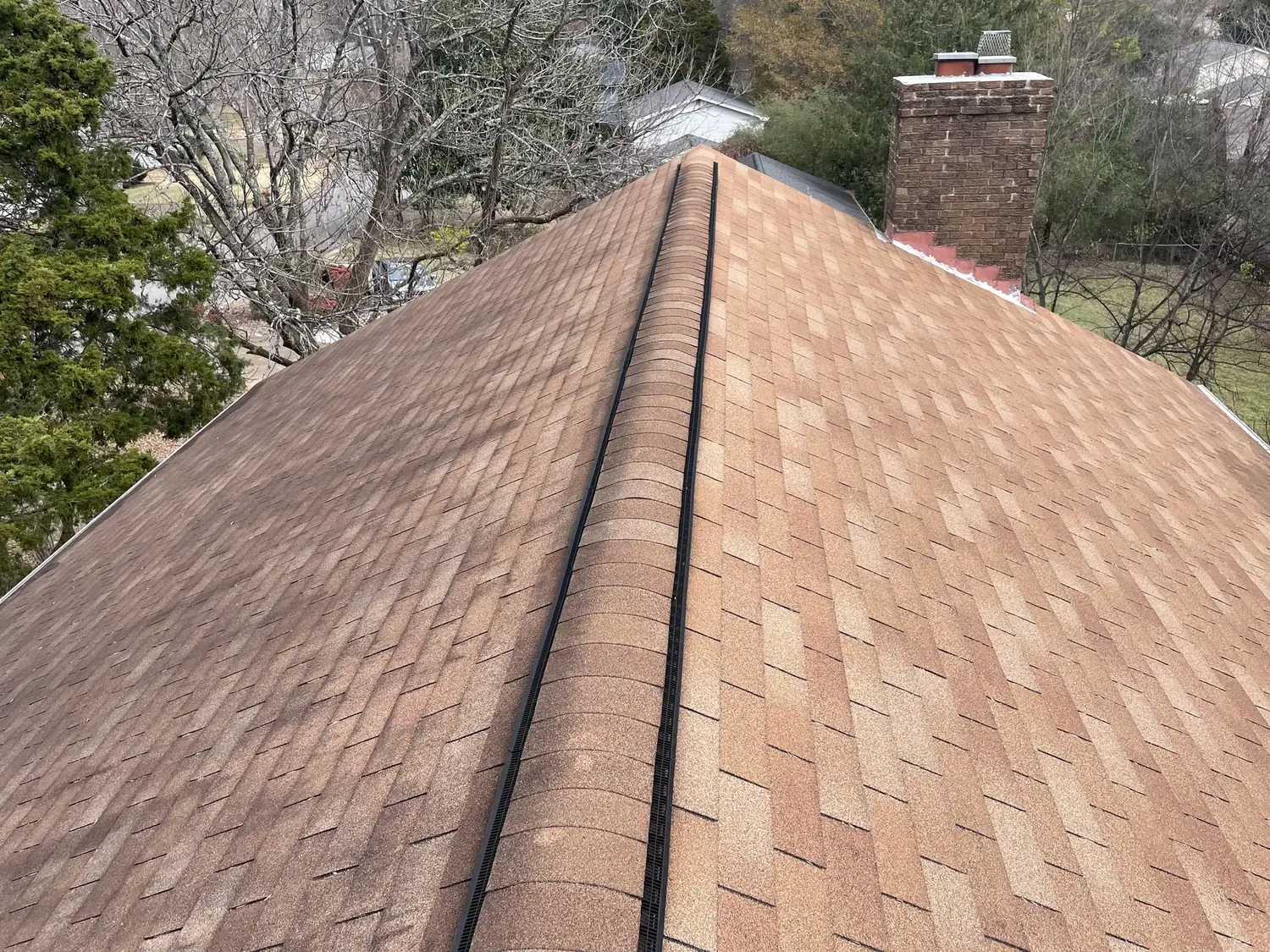
Before we quote, we fly the roof. You get photos of every plane, and you get them whether or not you hire us. It is the fastest way to see what you cannot see from the ground: how far the algae has spread, whether lichen has established, granule loss in the valleys, lifted or missing shingles, exposed nail heads, failing pipe boots, flashing separation, and debris packed behind chimneys or in valleys. Occasionally the drone tells us a roof should not be cleaned at all because it is near the end of its life — we would rather say that than take the job.
Our roof cleaning process
Drone inspection and quote
Full photo survey of every plane, condition notes, and a firm price. Any pre-existing damage is documented before we touch anything.
Protect below the roof
Landscaping saturated with clean water, sensitive plants tarped, downspout outlets pre-flooded, vehicles moved, furniture covered.
Low-pressure application
Metered solution applied evenly across the entire roof, ridge to eave, including shaded and rear planes.
Dwell and monitor
The solution works while we watch coverage, add where needed, and keep landscaping wet. No mechanical scrubbing, no pressure, no brooms.
Rinse and flush down
Low-pressure rinse of the roof, then gutters, siding, windows, walkways and beds flushed so nothing dries with residue on it.
Post-inspection
Second drone pass or ground walk with photos so you see the result, plus notes on anything the roof needs from a roofer.
Roof cleaning pairs with two other jobs
Runoff from a roof soft wash carries dead algae down onto your walls, so the sequence matters. We clean the roof first, then handle house washing so the siding ends the day cleaner than it started. While we are up there we can see the gutters, and nine times out of ten a roof with heavy algae also has troughs packed with granules and shingle grit — that is a good moment for gutter cleaning instead of a separate trip later. Concrete below the drip line often shows organic staining from the same runoff and cleans up with a pressure washing pass.