How we clean gutters
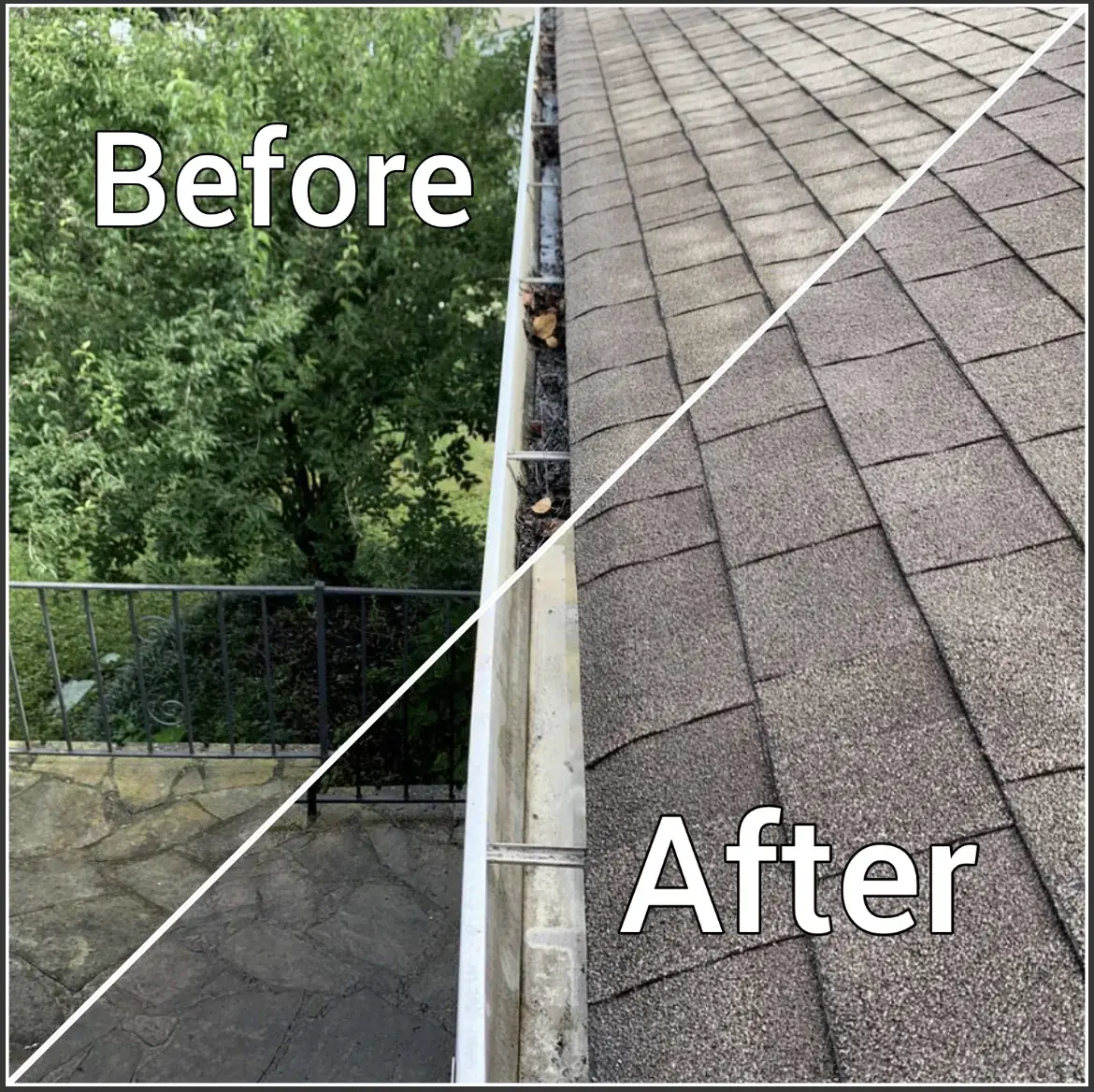
We blow the troughs clear of leaves, needles, seed pods and shingle grit, then flush every run with water so we can see how it drains, where it holds standing water, and whether the pitch is still correct. The flush is the diagnostic step — it tells us whether the downspout is carrying water or backing up, and whether the trough is holding a low spot that needs attention.
Downspouts are where the real clogs live
Most overflow complaints are downspout problems, not trough problems. Debris migrates to the outlet, jams at the top elbow, and packs down until the trough becomes a bathtub. We flush every spout from the top and confirm flow at the bottom. If a spout is blocked solid we work it from the discharge end, and if it is a buried drain line that has silted up, we tell you what we found rather than declaring victory when the water backs up.
Underground extensions and pop-up emitters get a specific check. A downspout tied into a buried line that no longer drains is worse than no extension at all: it delivers concentrated roof runoff straight into the soil next to your footing.
What clogged gutters actually cost
- Fascia rot. Water spilling behind the gutter keeps the fascia board permanently wet. Paint fails, wood softens, fasteners lose grip, and eventually the gutter pulls away — now you are paying for carpentry, not cleaning.
- Soffit and roof edge damage. Overflow wicks into soffit panels and the first few inches of roof deck, which is where ice-and-water membrane usually ends.
- Foundation movement. A single inch of rain on a 2,000 square foot roof is over a thousand gallons of water. Dumped at the corners of the house instead of routed away, that water swells and shrinks the clay soil common around Huntsville and moves your slab.
- Crawlspace and basement moisture. Saturated soil against the foundation is the leading cause of crawlspace humidity, mold and musty interior air.
- Siding staining. Overflow streaks organic residue down the wall — the dark stripes you see under gutter seams. That becomes a house washing job on top of the gutter job.
- Pests. Standing water and rotting debris are ideal for mosquitoes, and packed troughs are prime nesting material for wasps, birds and squirrels.
Our gutter cleaning process
Set up safely
Ladder standoffs so we never rest weight on the gutter lip, and stable footing where debris comes down.
Blow out every trough
Leaves, needles, seed pods and shingle grit blown clear of the full run.
Flush and verify flow
Water through the full run, downspouts flushed, discharge confirmed. Any blockage gets cleared, not reported as done.
Inspect while we're up there
Fascia and soffit condition, gutter pitch, loose spikes or hangers, separated seams, sagging sections, missing splash guards, and roof edge condition. Photos of anything that needs attention.
Haul away and rinse down
Debris bagged and removed, driveway and walkways rinsed, beds cleared, gutter faces wiped of streaks.
Free drone gutter inspection — two minutes, no ladder
Every gutter quote starts with a drone flight. Two minutes in the air and we have the full picture: every trough, every valley, every downspout outlet, and the roof edge in between. No ladder leaned against your gutter, no guesswork, and no charge. You see exactly what we see before anyone quotes a number.
Two minutes is the whole flight. The drone is up, it runs the gutter line and roof edge, and it is back down. What used to take a ladder setup and a walk of the perimeter is done before you finish a cup of coffee. The photos are yours — keep them, share them, or use them to get a competing quote. We fly it because it is faster, safer, and more thorough than any ladder view, and because you should see your own roof before you pay anyone to touch it.
The drone also catches what a ladder view misses: debris packed behind chimneys, valleys holding leaf dams, shingle grit piled at the outlets, and algae streaking that means your roof needs attention too. See roof cleaning if the drone shows black streaking. Either way, the inspection is free and the photos are yours.
Seasonal timing in North Alabama
Our leaf drop is long and staggered. Oaks hold on into December, maples drop early, sweetgum balls arrive whenever they feel like it, and pines shed needles all year. Spring adds a heavy pollen and seed load that mats into the bottom of the trough and hardens. That is why one annual cleaning is usually not enough here: a fall-only schedule leaves you clogged through spring storms, which are the heaviest rainfall events we get.
Cleaning before storm season matters more than cleaning on a calendar date. If you only do it once a year, do it in late fall and accept that you are gambling on spring.
Recurring maintenance plans
This is the service worth putting on autopilot. On a recurring plan we schedule your visits by season, show up without you having to call, and price the visits below one-off rates because we already know your roof, your access points and your problem spots. You get photos after each visit and a note if anything changed.
- Twice-yearly: late spring and late fall — the right default for most homes with mature trees.
- Quarterly: for heavy pine or dense hardwood canopy, or homes with buried drain lines that silt up.
- Bundled exterior: gutters paired with house washing and concrete pressure washing on one annual visit, which is the cheapest way to buy all three.
Getting on the schedule takes one message. Send your address and pick a season — we handle the rest, and you can cancel any time [NO CONTRACT TERMS TO CONFIRM].