
Why red clay is different from normal dirt
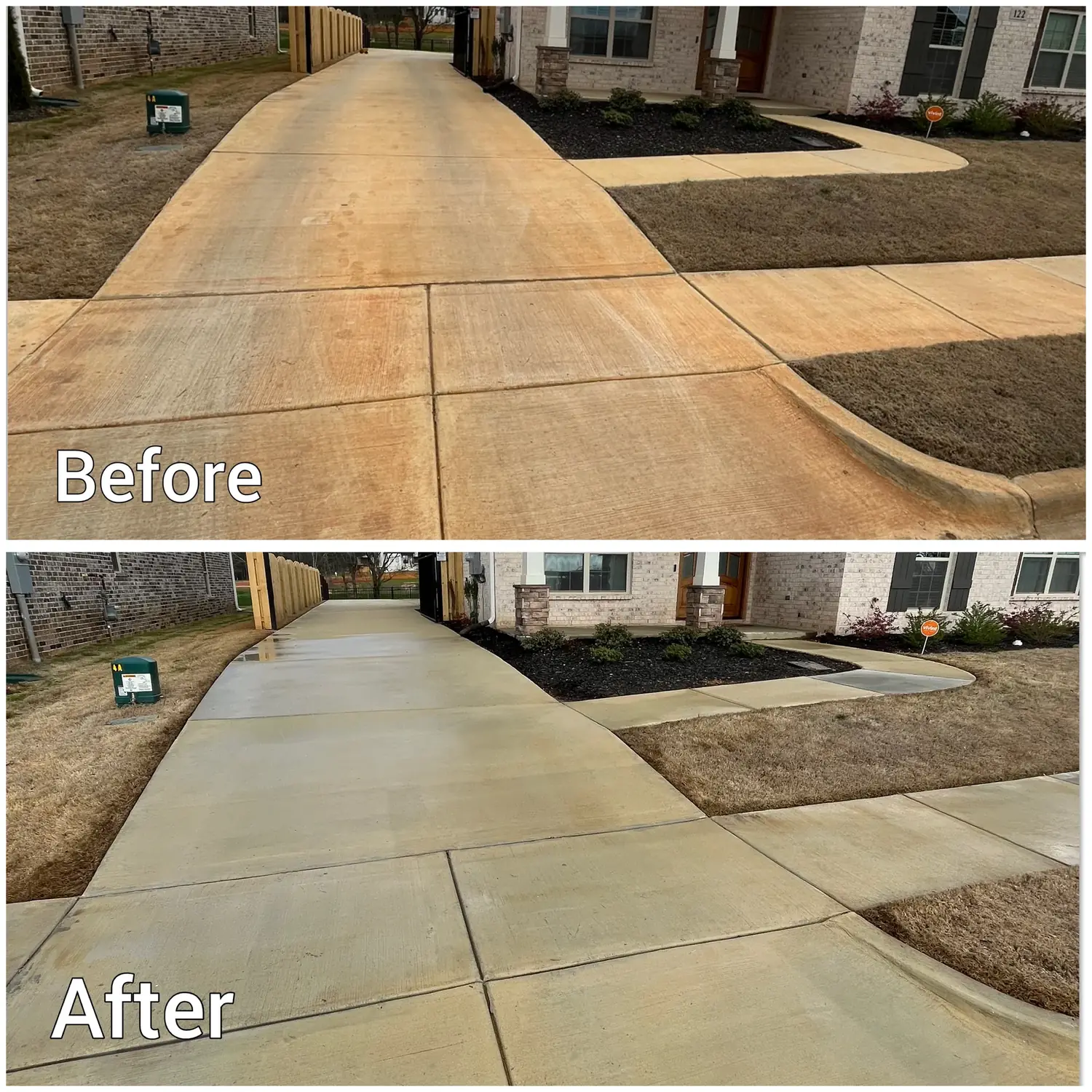
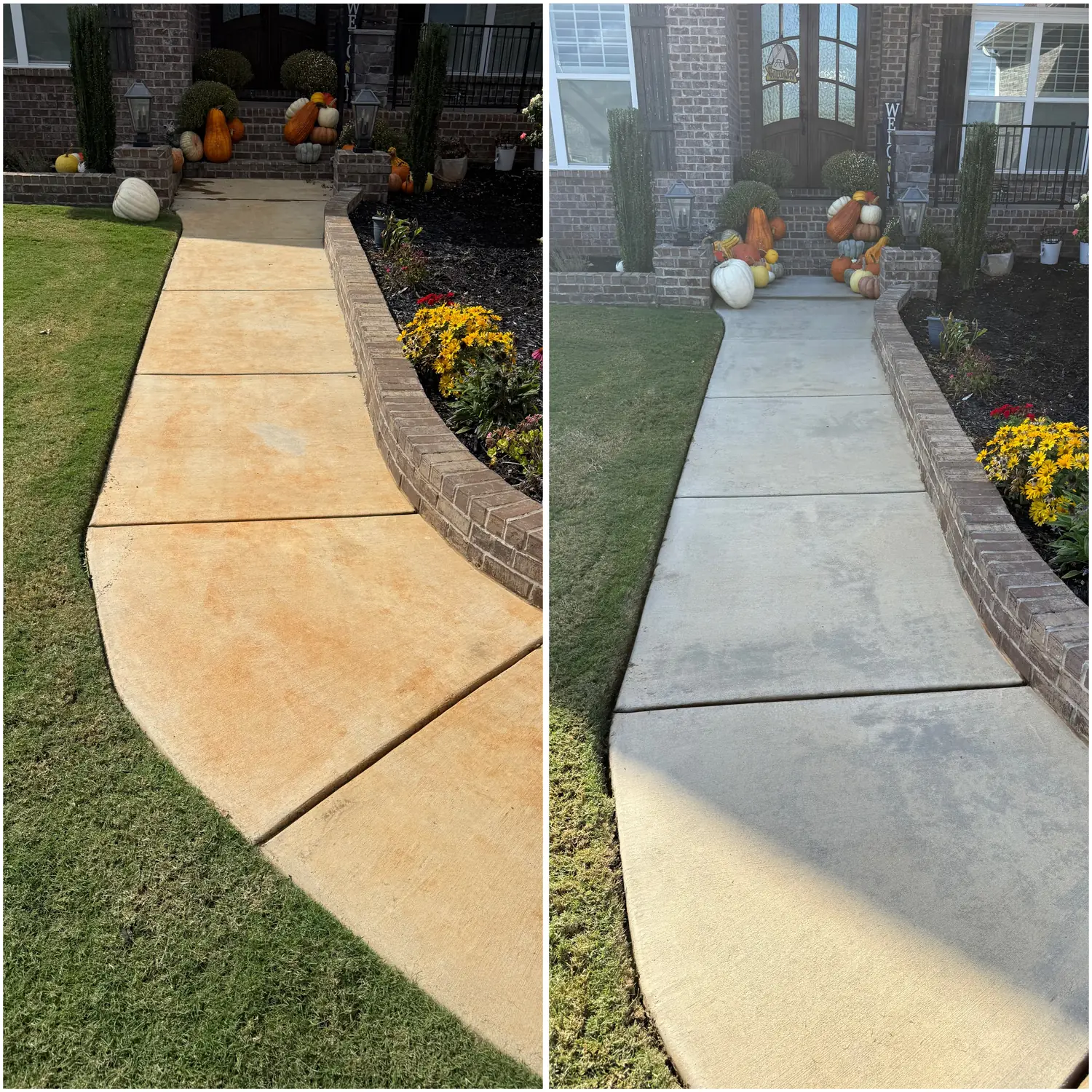
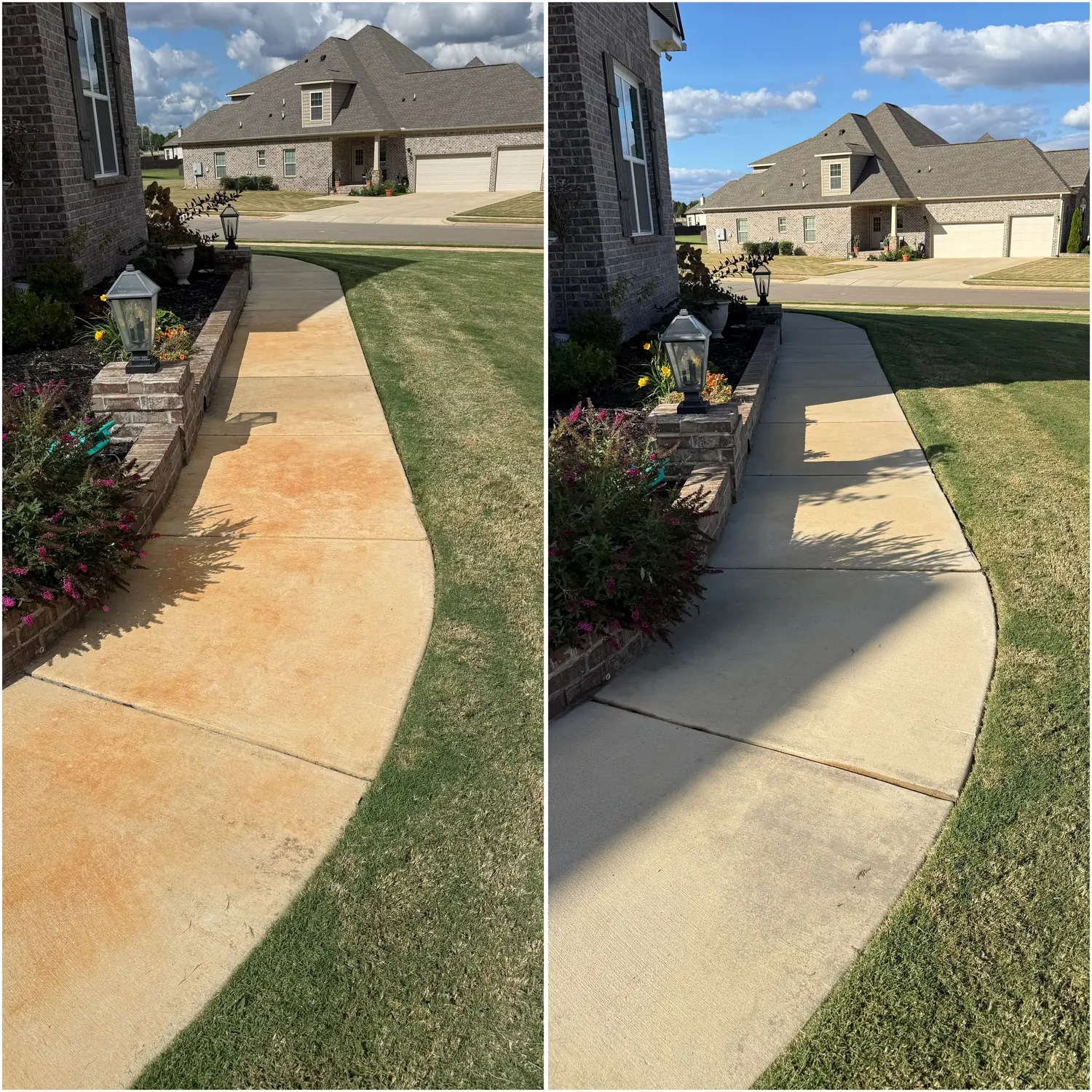
The orange stain on a Huntsville driveway is not mud you can rinse. Alabama red clay carries iron that oxidizes and bonds to the calcium in concrete. On top of that, the clay particles are small enough to pack into the slab's pores rather than sit on the surface. The result is a stain that is chemically attached and physically embedded — two reasons plain water, even at full pressure, leaves an orange shadow behind.
This is why a freshly pressure-washed driveway sometimes still looks orange. The wand removed every loose thing on the slab and left the bonded clay exactly where it was. More pressure does not help. It often makes the stain worse by forcing clay deeper into the concrete.
Why a clay-removal treatment, not more pressure
Red clay comes off when the bond breaks, not when the particle moves. We use a red-clay-specific cleaner and dwell time to break the bond and release packed clay from the concrete pores. The chemical does the work; the rinse just carries it away.
Dwell time matters more than strength. A correctly diluted mix left on the stain long enough releases the clay at a strength that will not etch the slab. Rushing it with a stronger mix risks damaging the cream layer of the concrete, which leaves a permanent rough patch that stains worse than before.
Surfaces we treat
- Concrete driveways, aprons and garage approaches
- Sidewalks, walkways and front steps
- Patios, porches and pool decks
- Stamped and exposed-aggregate concrete (tested first, lighter dilution)
- Brick and paver surfaces (joint sand checked after)
- Retaining walls and curbing with clay runoff staining
What goes wrong when red clay is treated badly
- Etched concrete. A harsh chemical left too long can damage the cream layer, leaving a rough, pale patch that holds every future stain.
- Driven-in clay. Pressure washing without the chemical step packs clay deeper into the pores so the stain sets harder.
- Blown-out joint sand. Harsh chemicals and pressure together can strip paver joint sand, leaving the field loose.
- Killed landscaping. Chemical runoff that is not diluted and rinsed can burn grass and beds along the slab edge.
- Sealer damage. The wrong product on a sealed stamped patio can cloud or strip the sealer if it is not tested first.
Our process, step by step
Identify the stain and the surface
We confirm it is red clay and not rust, tire marks or organic staining, and we check whether the slab is plain concrete, stamped, paver or sealed. Each gets a different dilution.
Protect landscaping and adjacent surfaces
Grass, beds and anything nearby get pre-wetted so runoff is diluted before it touches them. We cover or avoid sealed surfaces that the wrong product could cloud.
Apply the clay remover and let it dwell
The red-clay remover goes on the stained areas only and sits long enough to break the iron bond. You can often watch the orange lift before the rinse.
Surface-clean and rinse
Once the clay is released, a surface-cleaner pass and rinse carry it off the slab. Adjacent concrete gets a matching pass so there is no clean patch in a dirty field.
Rinse plants, neutralize, inspect
We rinse the landscaping again, neutralize and rinse the slab so no active product is left, and walk it with you or send photos.
Red clay vs. rust: telling them apart
Red clay and rust look similar from the curb and need different treatment. Rust usually comes from irrigation water, fertilizer, or a metal object sitting on the slab — it shows as brown-orange streaks or rings and lifts with an oxalic rust remover. Red clay shows as a smeared orange film where water or tires carried soil across the concrete, and it needs a red-clay-specific cleaner. We identify which one (or both) before we start, because an oxalic rust remover may lighten clay discoloration but it will not release packed red clay from concrete the way a true clay remover does.
Stop the clay from coming back
The treatment removes the stain; keeping it off is about the path the clay takes onto the slab. Common sources in North Alabama: a bare bank or ditch that washes across the driveway in a hard rain, tires tracking clay up from a dirt road or new construction, and downspouts discharging onto the concrete. We point out the source while we are on site. Fix the runoff or the tracking, and the slab stays clean.
Red clay removal pairs naturally with a full driveway pressure washing on the same visit, since the surface-cleaner pass happens after the treatment dwell. If the same runoff is staining your siding, a house washing can be planned for the same trip.