Surfaces we clean
- Concrete driveways, aprons and garage floors
- Sidewalks, walkways and front steps
- Patios, porches and covered outdoor kitchens
- Pool decks, including broom-finish and cool-deck coatings
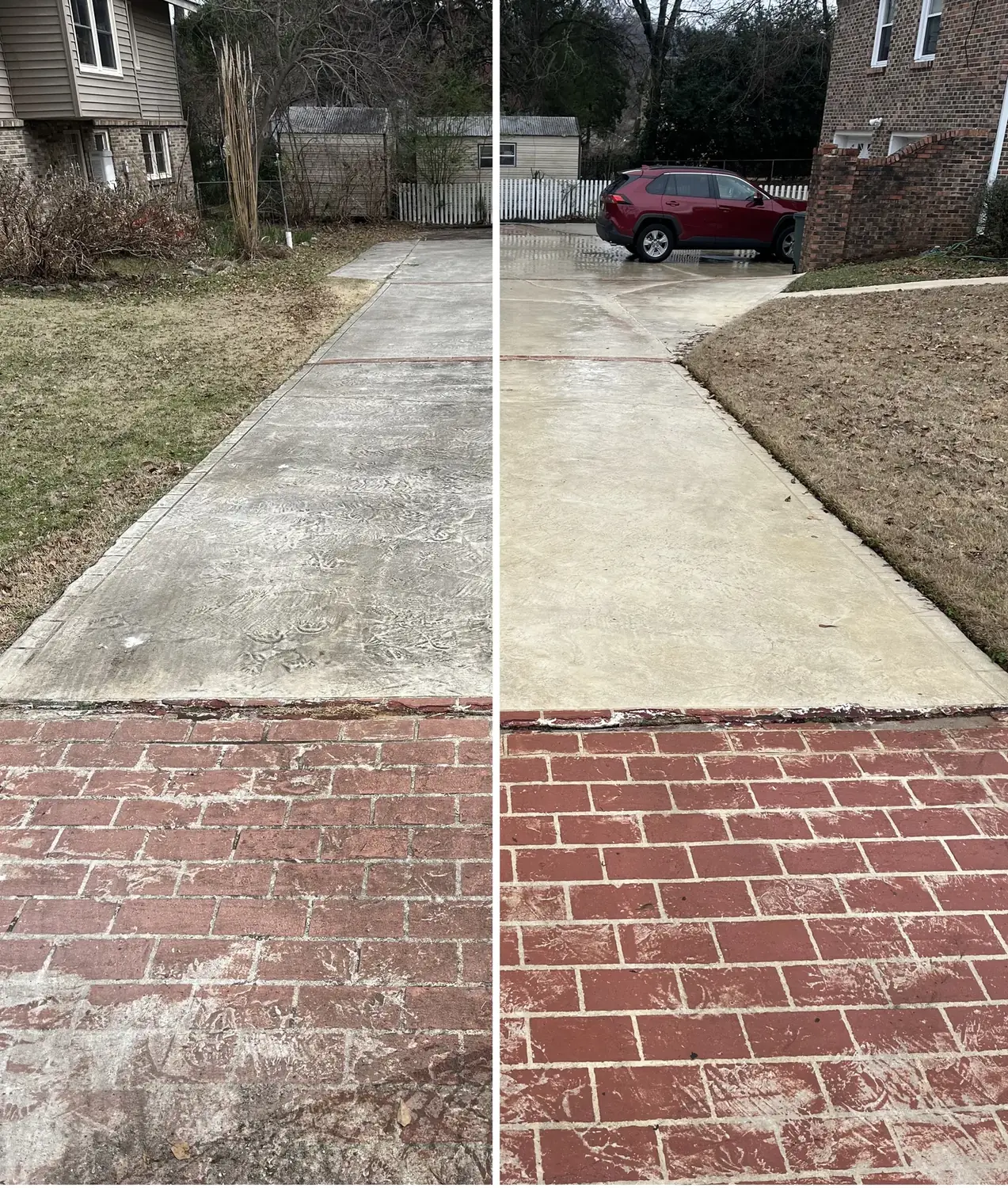
- Stamped and exposed-aggregate concrete (lower pressure, no rotary tips)
- Brick and paver walkways, with joint sand re-check
- Retaining walls and curbing
- Wood, vinyl and aluminum fencing (soft wash, never blasted)
- Dumpster pads, drive-throughs and commercial entryways
Surface cleaner vs. wand: why it matters
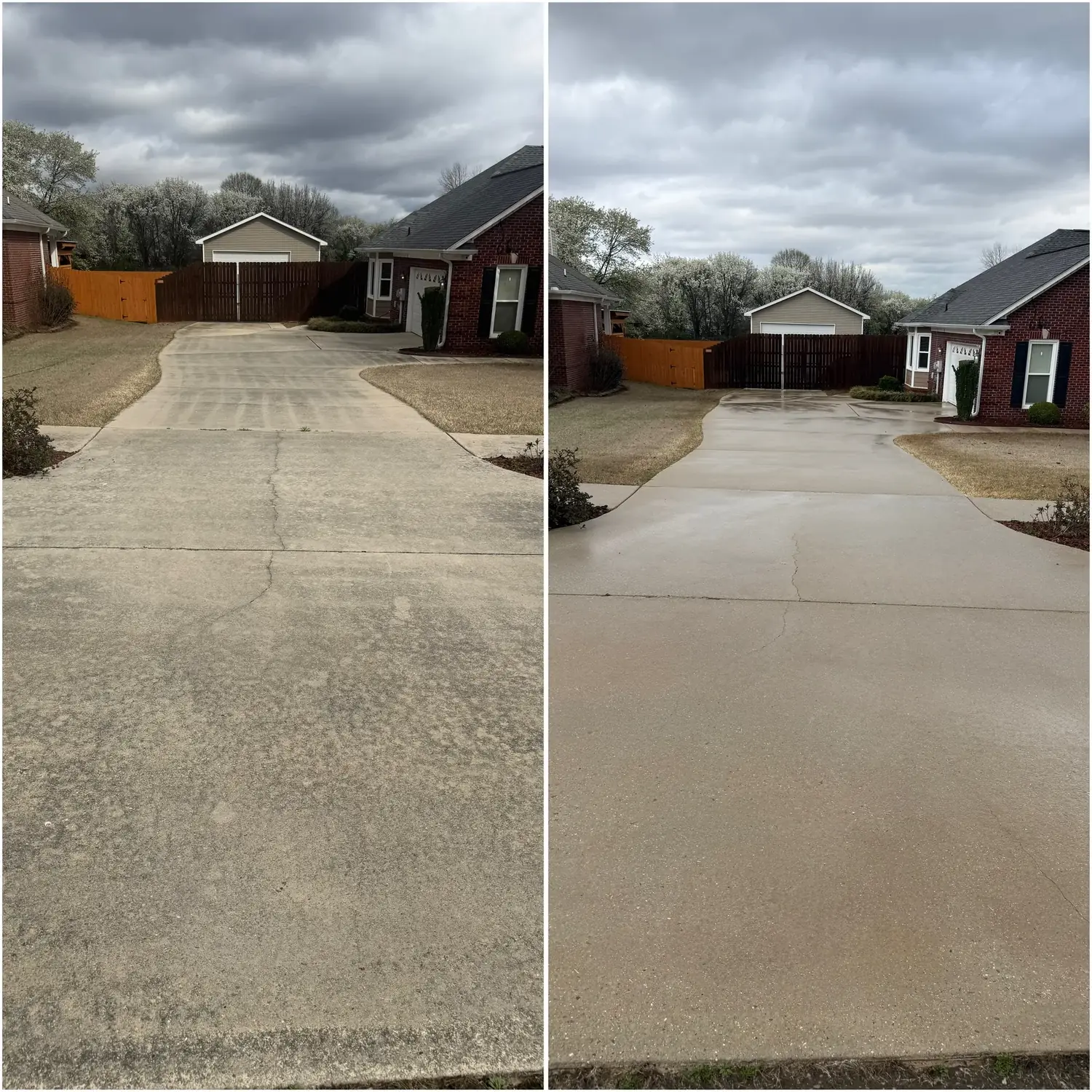
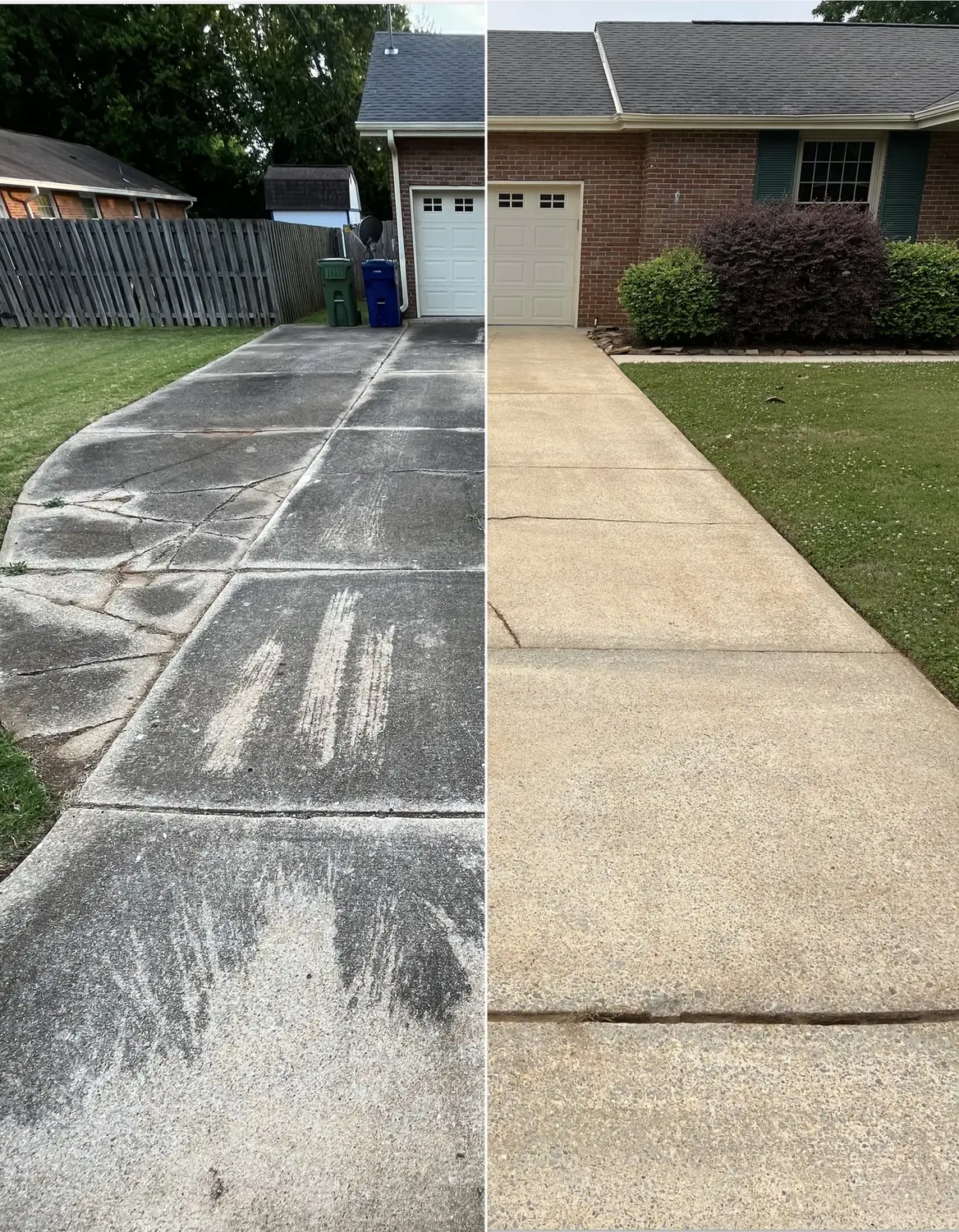
A pressure washing wand puts all of the machine's energy into a narrow fan. Sweep that fan across a driveway and you get feathered edges where passes meet and clean stripes where they do not. Once concrete is cleaned unevenly, the only fix is cleaning the whole slab again, harder. That is where most of the “my driveway looks striped” complaints come from.
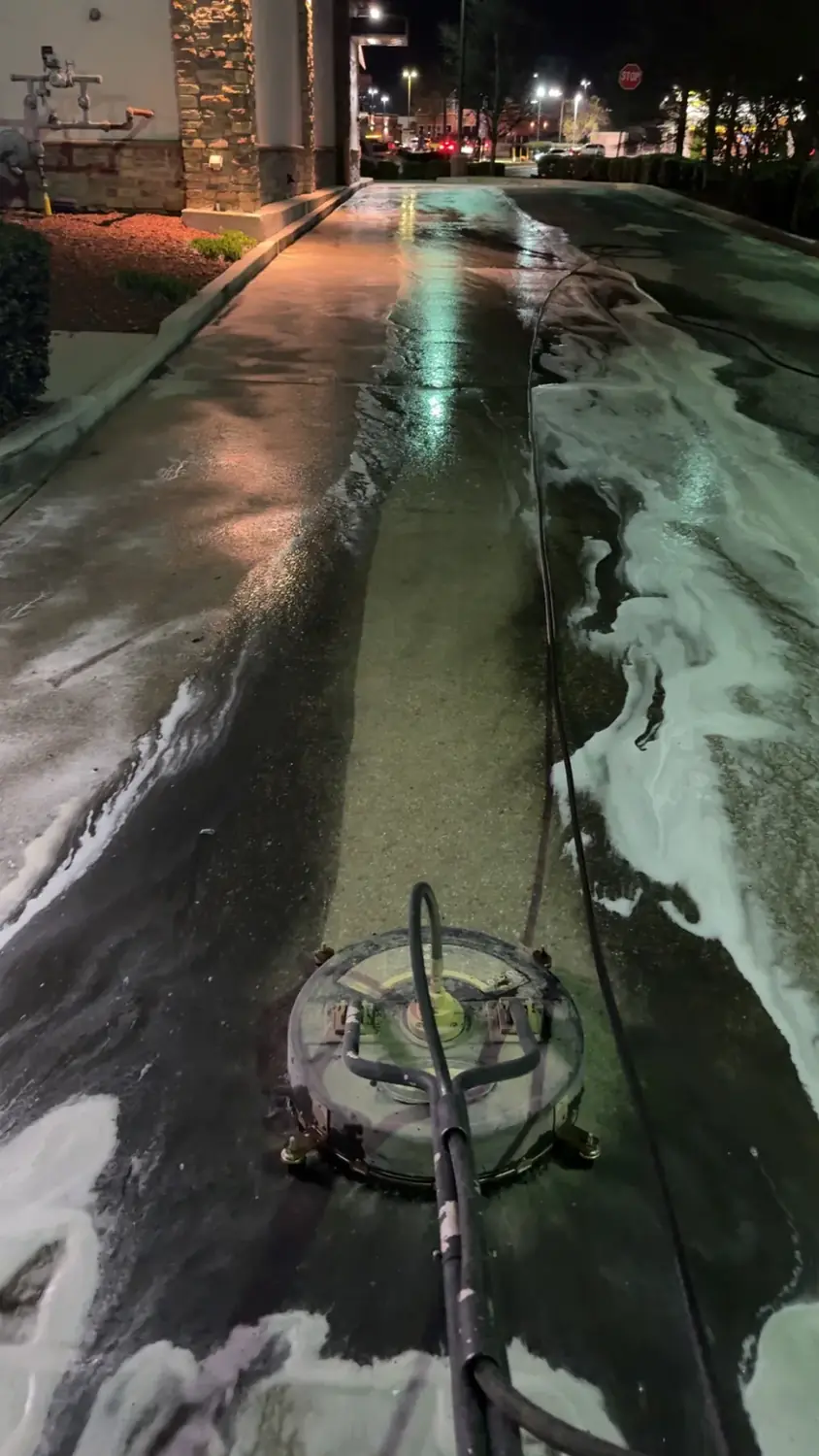
A surface cleaner solves it mechanically. Two jets spin inside a shrouded housing at a fixed height and fixed angle, so every square inch receives the same pressure. The result is one uniform tone rather than a patchwork.
Pressure gets matched to the substrate. Standard poured concrete tolerates a real working pressure. Stamped and decorative concrete, older brick and soft mortar get less pressure and more chemistry. Pavers get a careful approach because too much pressure strips joint sand and leaves the field unstable.
Post-treatment is what makes it stay clean
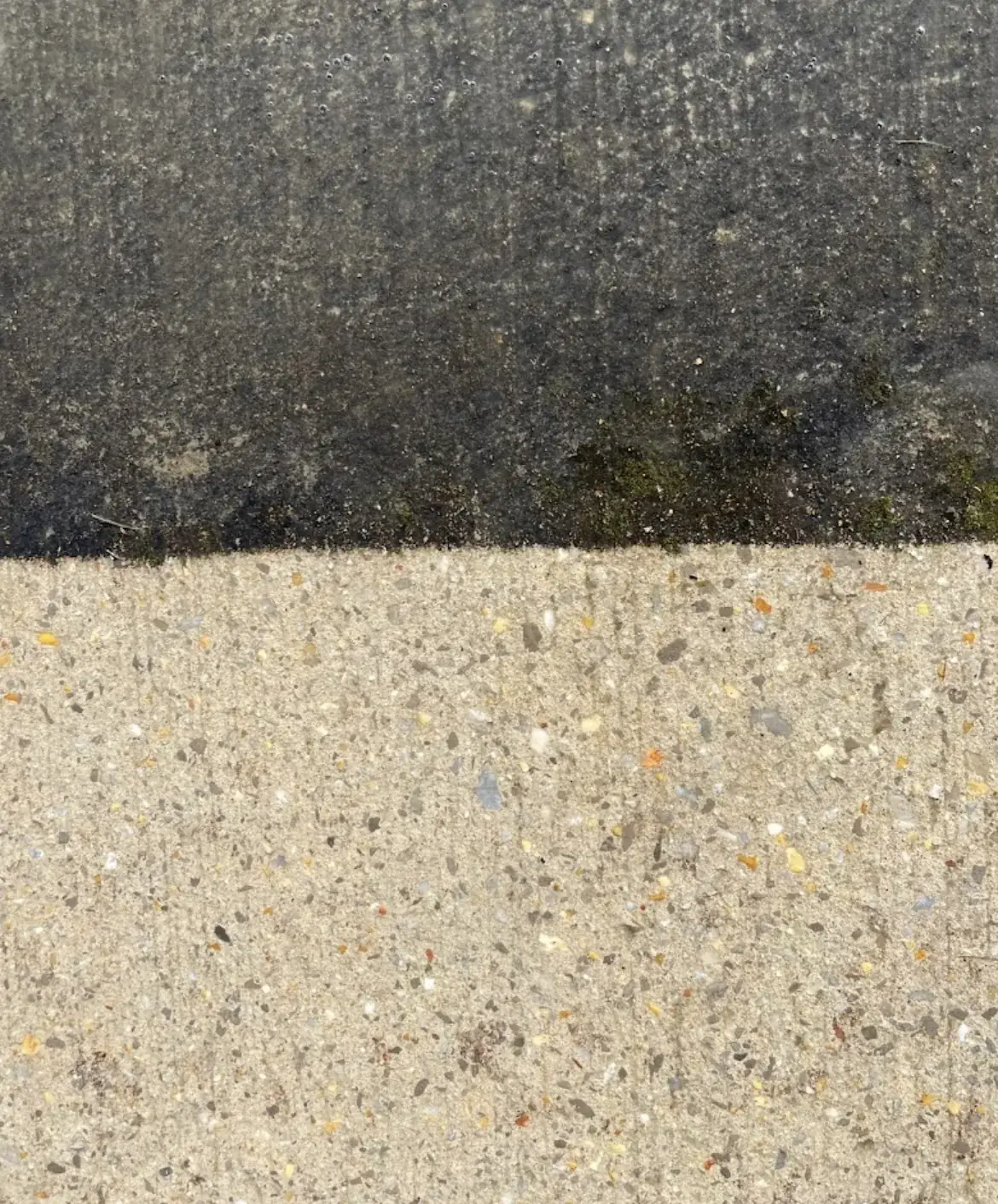
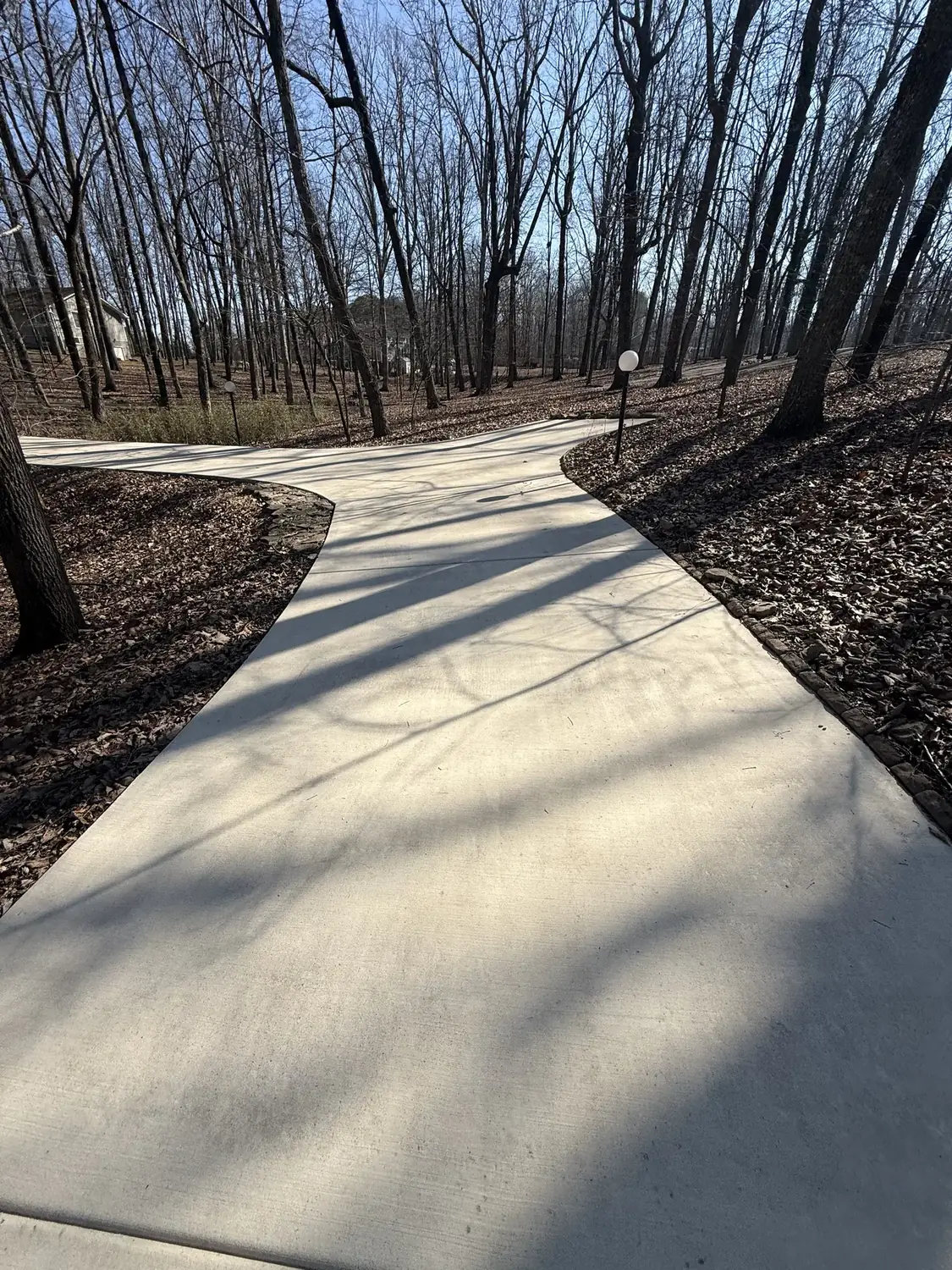
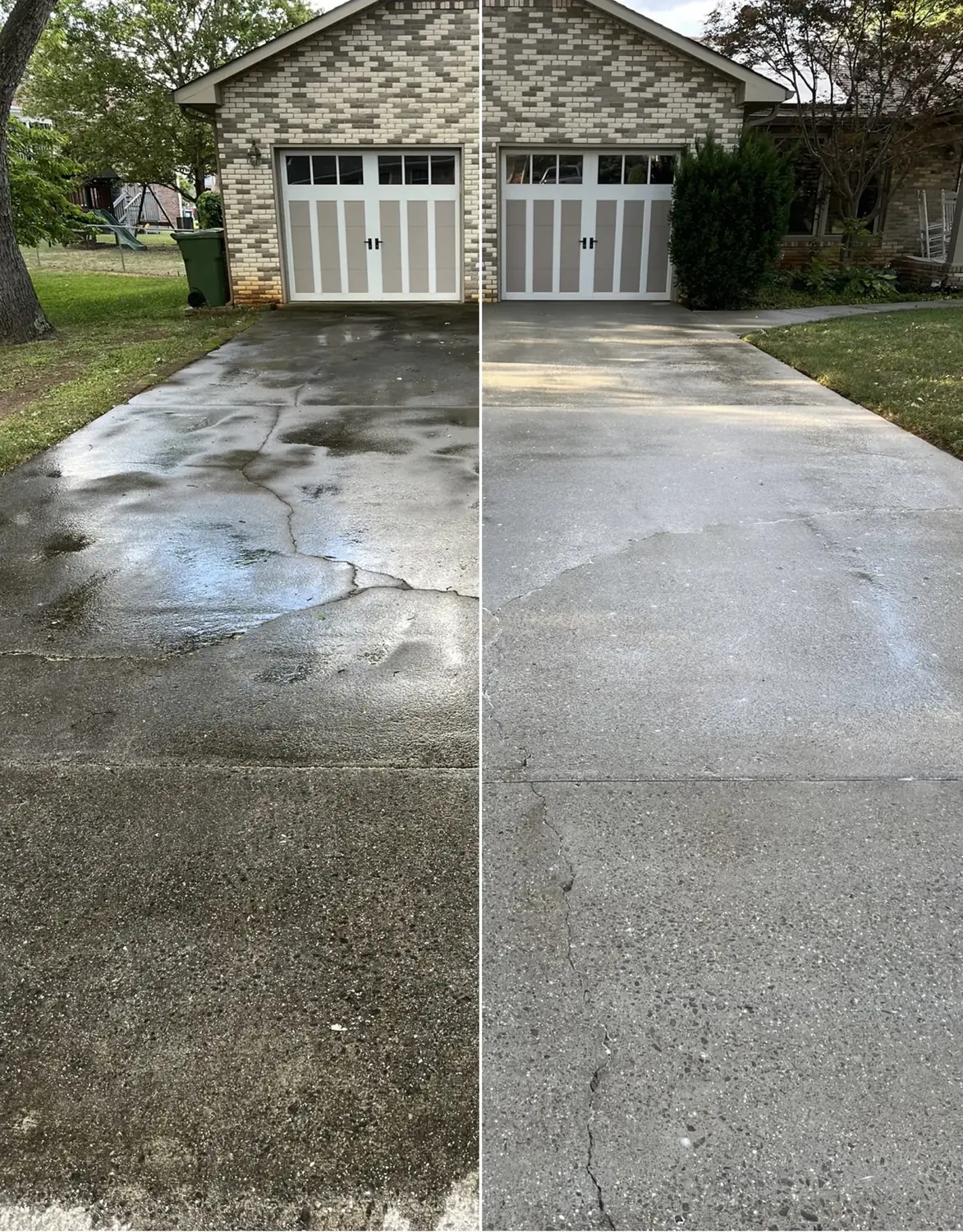
Grey concrete in North Alabama is rarely just dirt. It is algae, mildew and lichen feeding on humidity and shade. Blasting removes the visible layer while leaving spores in the pores, which is why an untreated driveway greens back up in a few months. We clean first, then post-treat with a hypochlorite and surfactant blend and give it dwell time to kill the growth at the root, so the slab stays clean rather than merely looking clean for a week.
Specific stains get specific chemistry. Degreaser and dwell time for oil drips and grill grease. Oxalic-based rust remover for irrigation and fertilizer stains, applied and rinsed carefully so it does not bleach adjacent surfaces. Tire marks are a plasticizer transfer and sometimes lighten rather than vanish — we will say so up front instead of after.
What goes wrong when concrete cleaning is done badly
- Wand striping. Permanent-looking lines from cleaning flatwork without a surface cleaner.
- Etching and cream-layer loss. A zero-degree tip held close removes the top paste, leaving rough patches that hold dirt worse than before.
- Blown-out joint sand. Pavers cleaned at too much pressure lose their sand, then shift and settle.
- Killed landscaping. Detergent runoff that never gets diluted burns beds and turf along the driveway edge.
- Water intrusion. High pressure aimed at a garage threshold, door sweep or siding pushes water where it does not belong.
- Fast regrowth. No post-treatment means the algae is still alive and the slab greens up by the next wet season.
Our process, step by step
Walk the property
We look at slope, drainage, stain types, expansion joint condition, downspout discharge points and where runoff will travel. Anything that will not fully clean gets flagged before work starts.
Protect what should not get wet
Beds and turf get pre-wetted so any runoff is already diluted. Outlets, low-voltage lighting, pool equipment and door thresholds get covered or avoided.
Surface-clean in consistent passes
Controlled pressure, consistent speed. Then the wand for edges, joints, steps and tight corners.
Post-treat and dwell
After the slab is clean, the killing solution goes down and sits long enough to kill organic growth at the root. Spot treatments for oil and rust go on as needed.
Rinse plants, inspect
We rinse the adjacent plants again so nothing dries on them, then walk it with you or send photos.
What to expect on the day
Plan for one to three hours on a typical driveway, sidewalk and porch package. Cars need to be off the concrete, pets inside, and windows closed on the working side. Concrete dries unevenly for a couple of hours and can look blotchy while it does — that is moisture, not workmanship. Expansion joints hold water longest. If a stain was called out as “may not fully release,” you will see exactly the result we described rather than a surprise.
Concrete cleaning is also the easiest service to bundle. If we are already on site, adding a house washing pass costs less than a separate trip, and cleaning siding after the driveway means any splash-back from the flatwork gets rinsed off the lower courses. If you are also seeing dark stripes up top, that is algae — see roof cleaning.
Commercial and HOA flatwork
We handle storefront sidewalks, entryways, dumpster pads and small lots on early-morning or after-hours schedules so cleaning does not interfere with business. Recurring quarterly service keeps gum, grease and organic staining from ever setting in, which costs less per visit than annual heavy restoration.