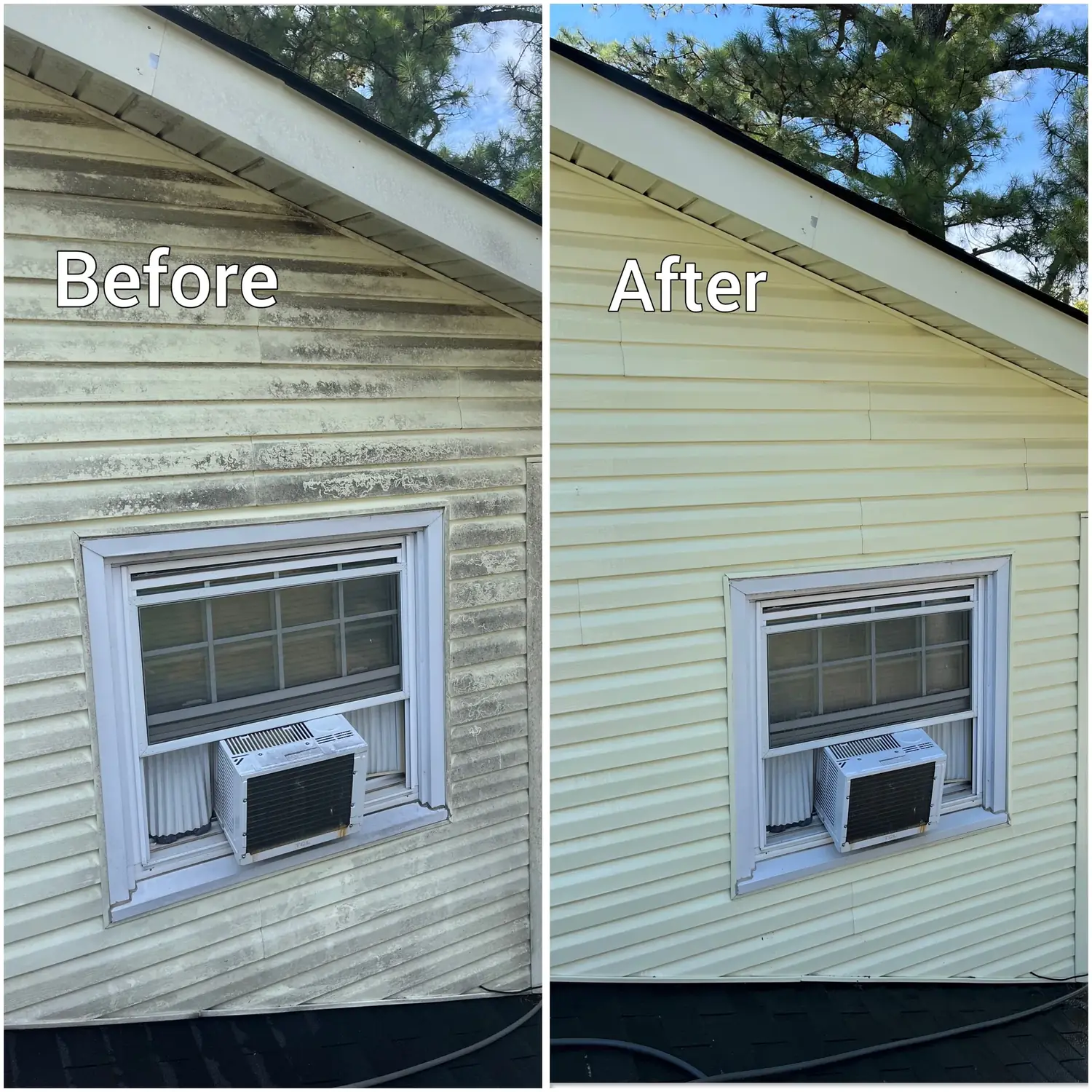
Soft washing vs. pressure washing your house
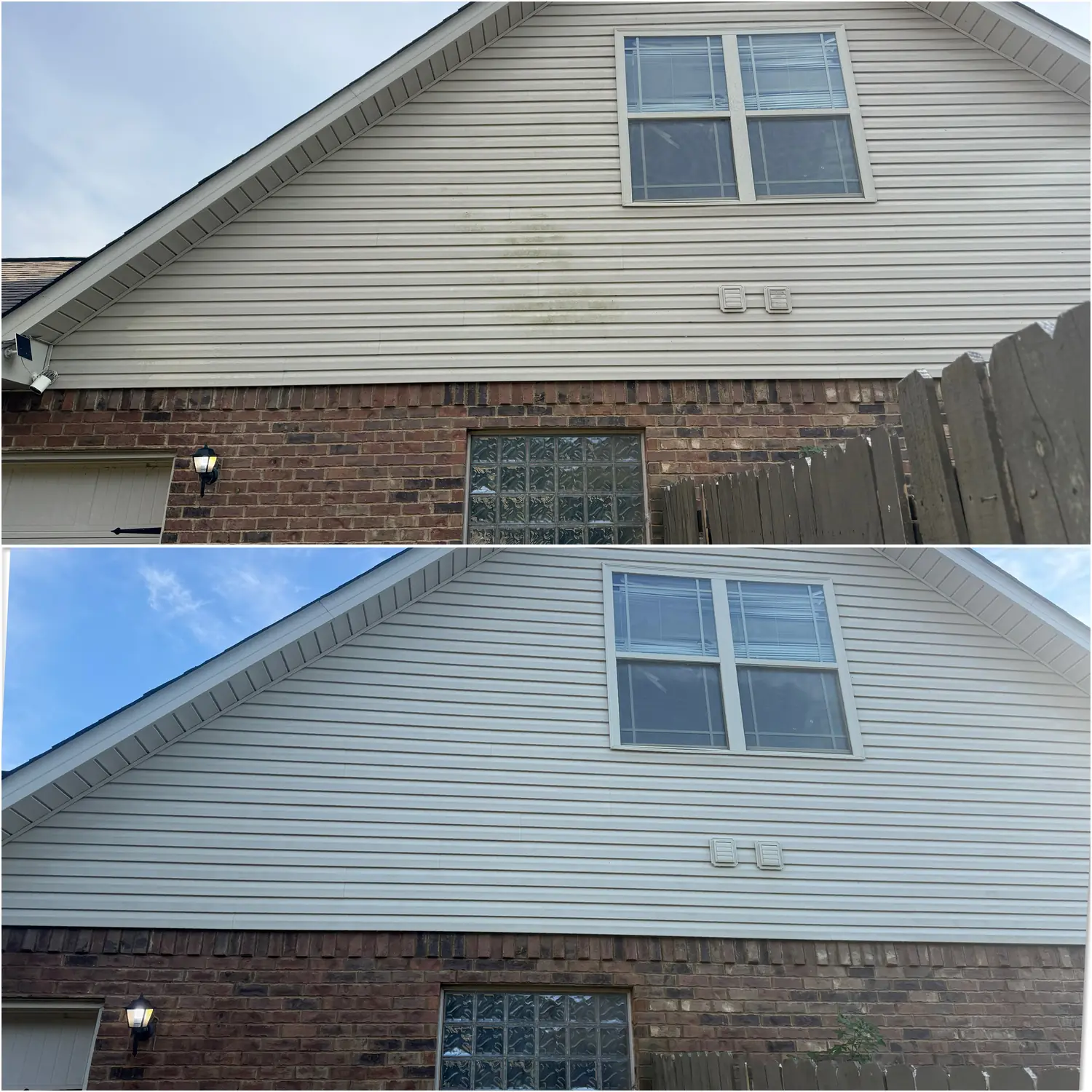
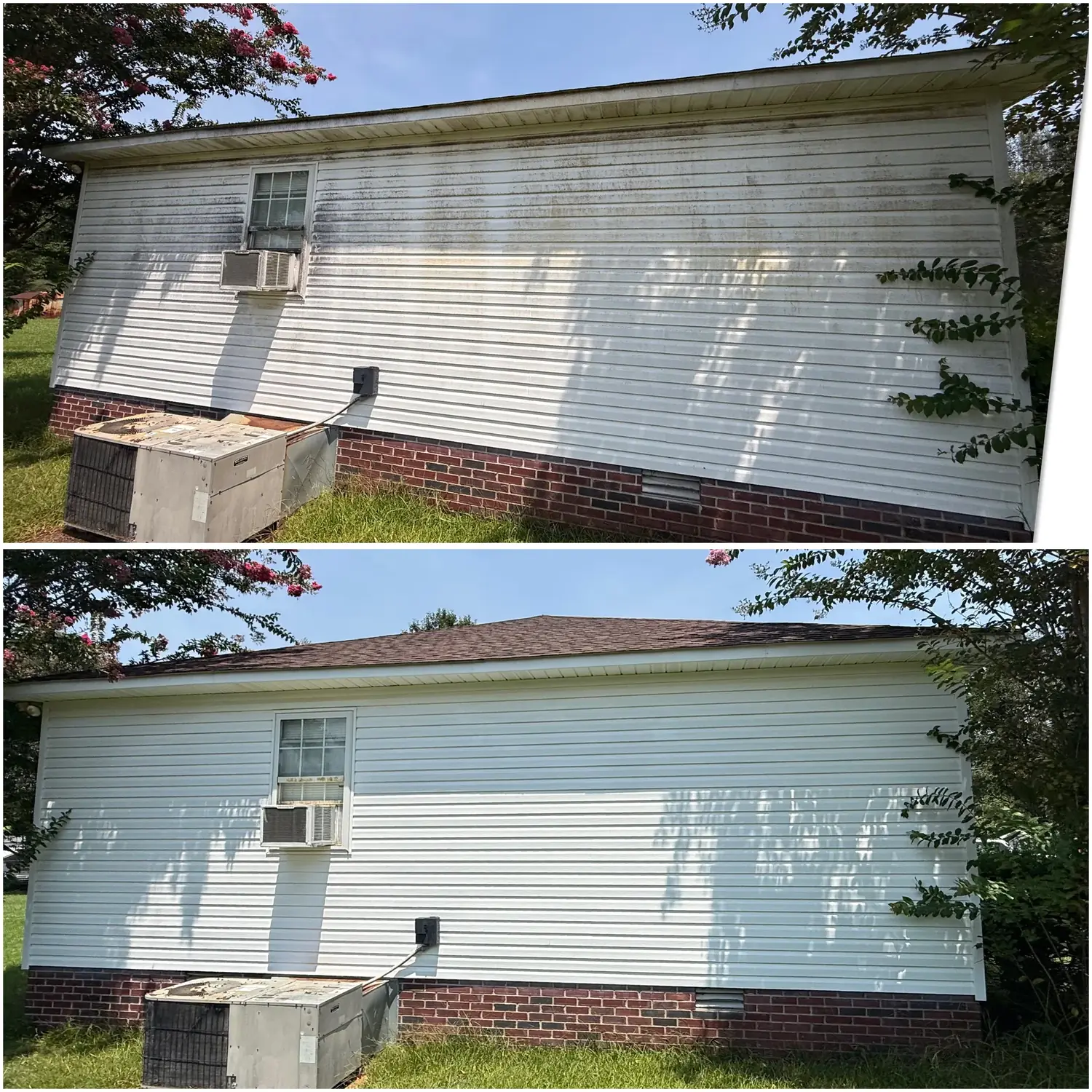
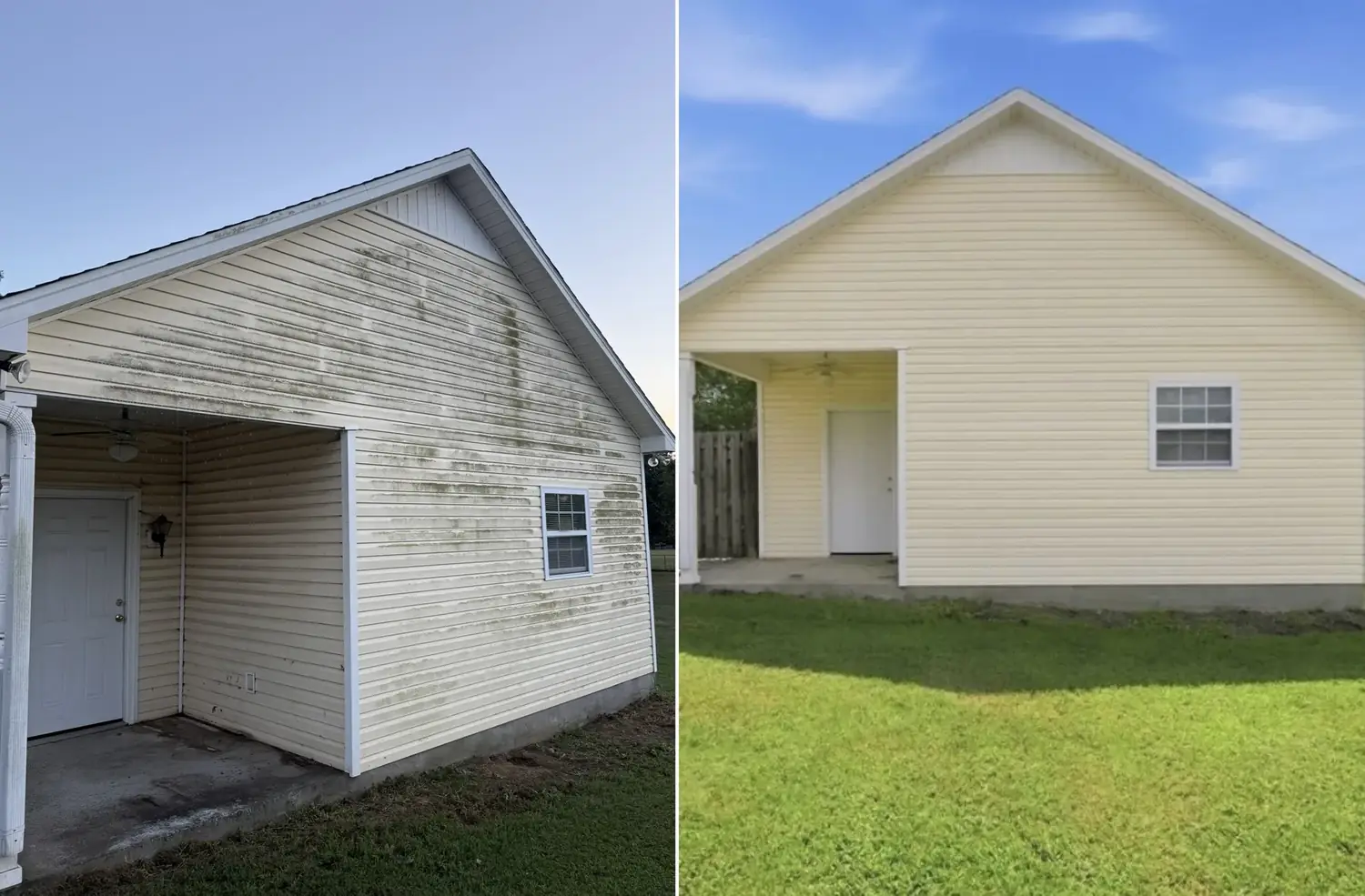
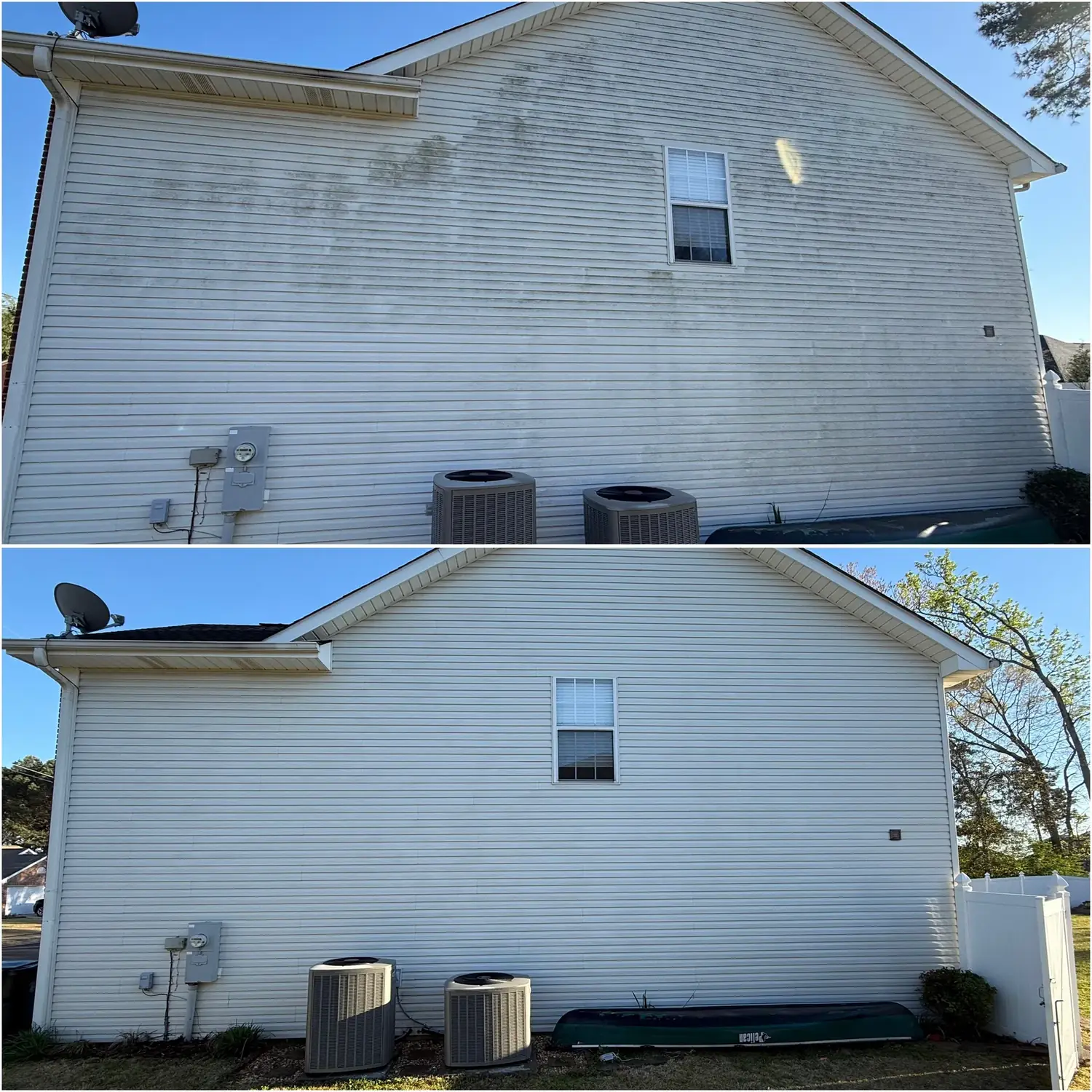
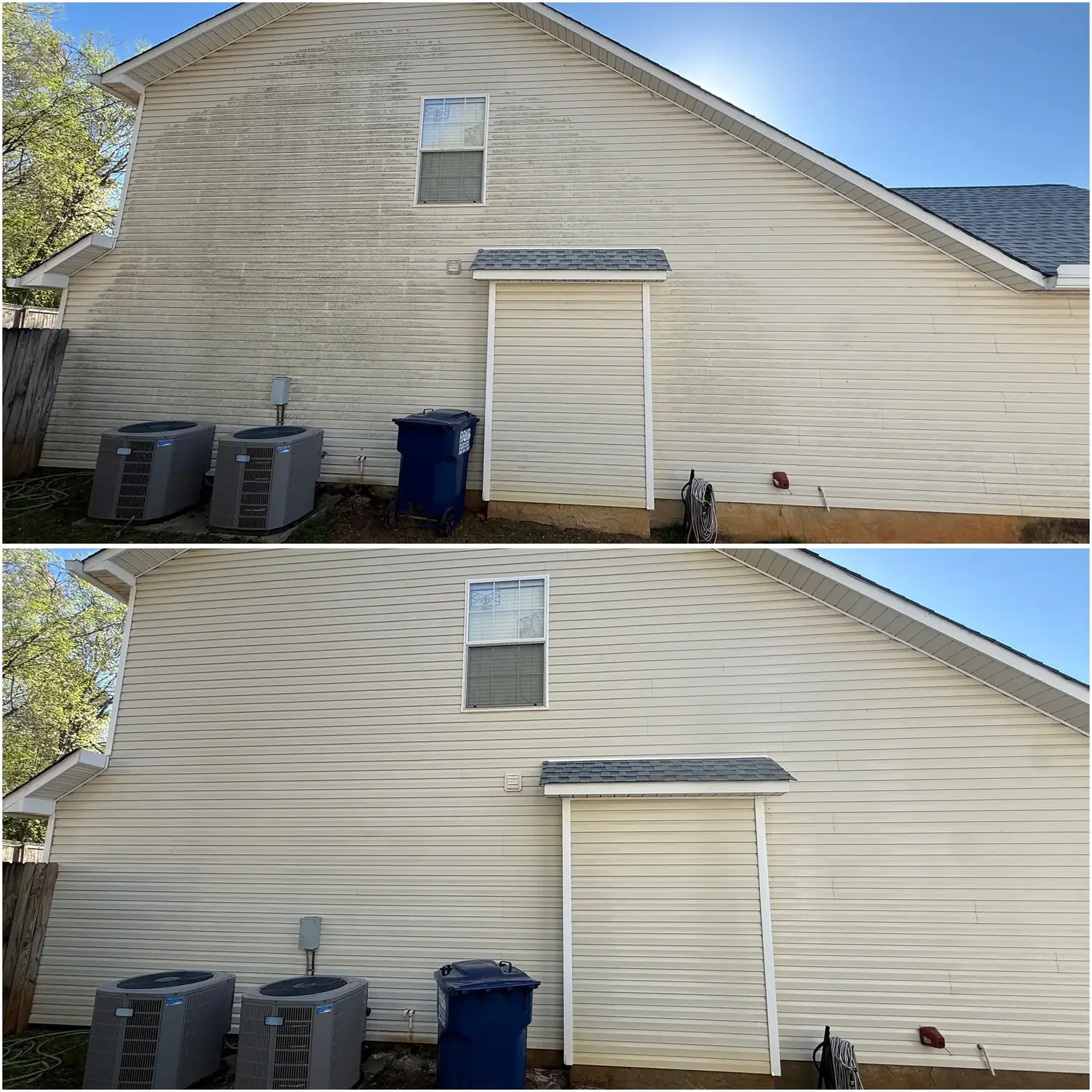
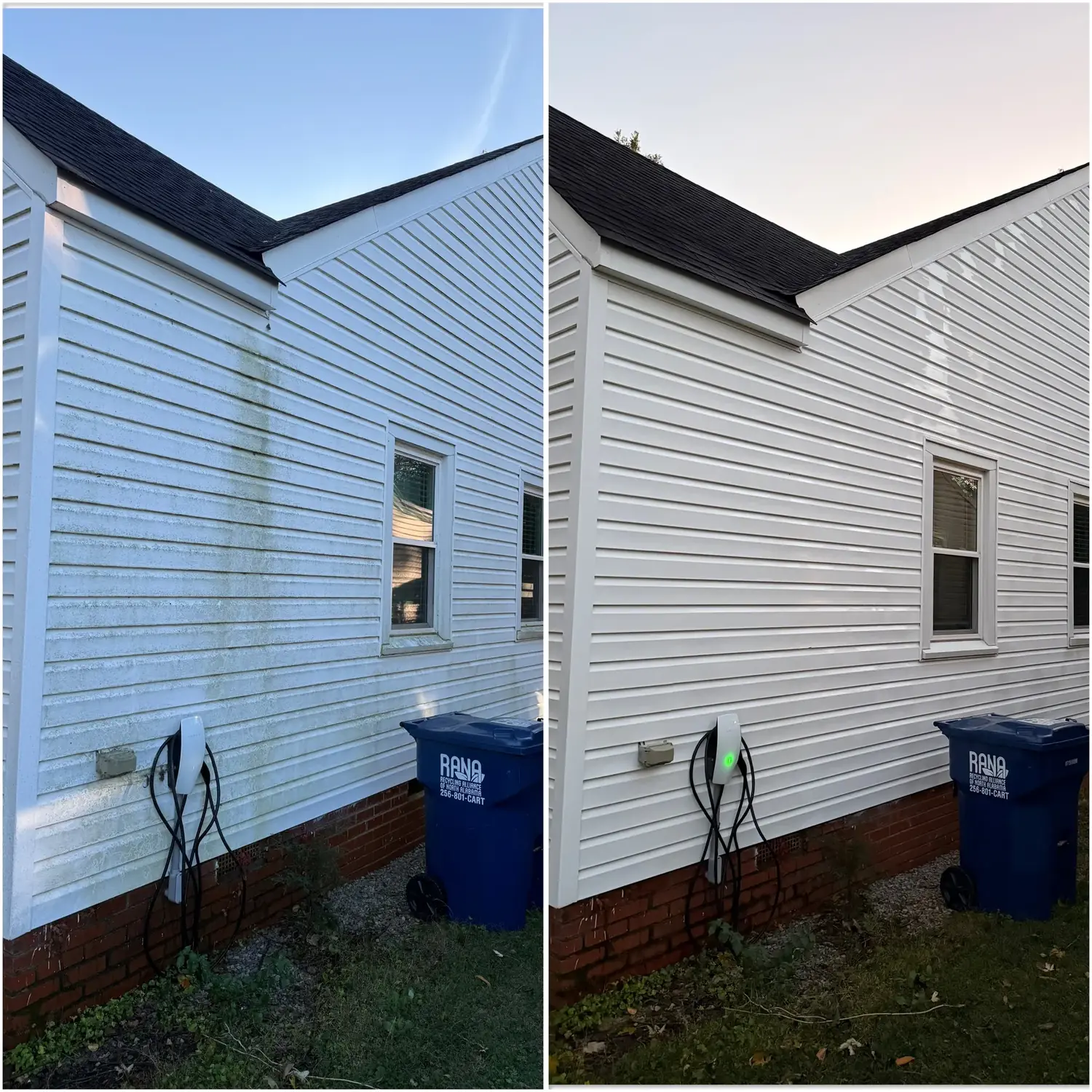
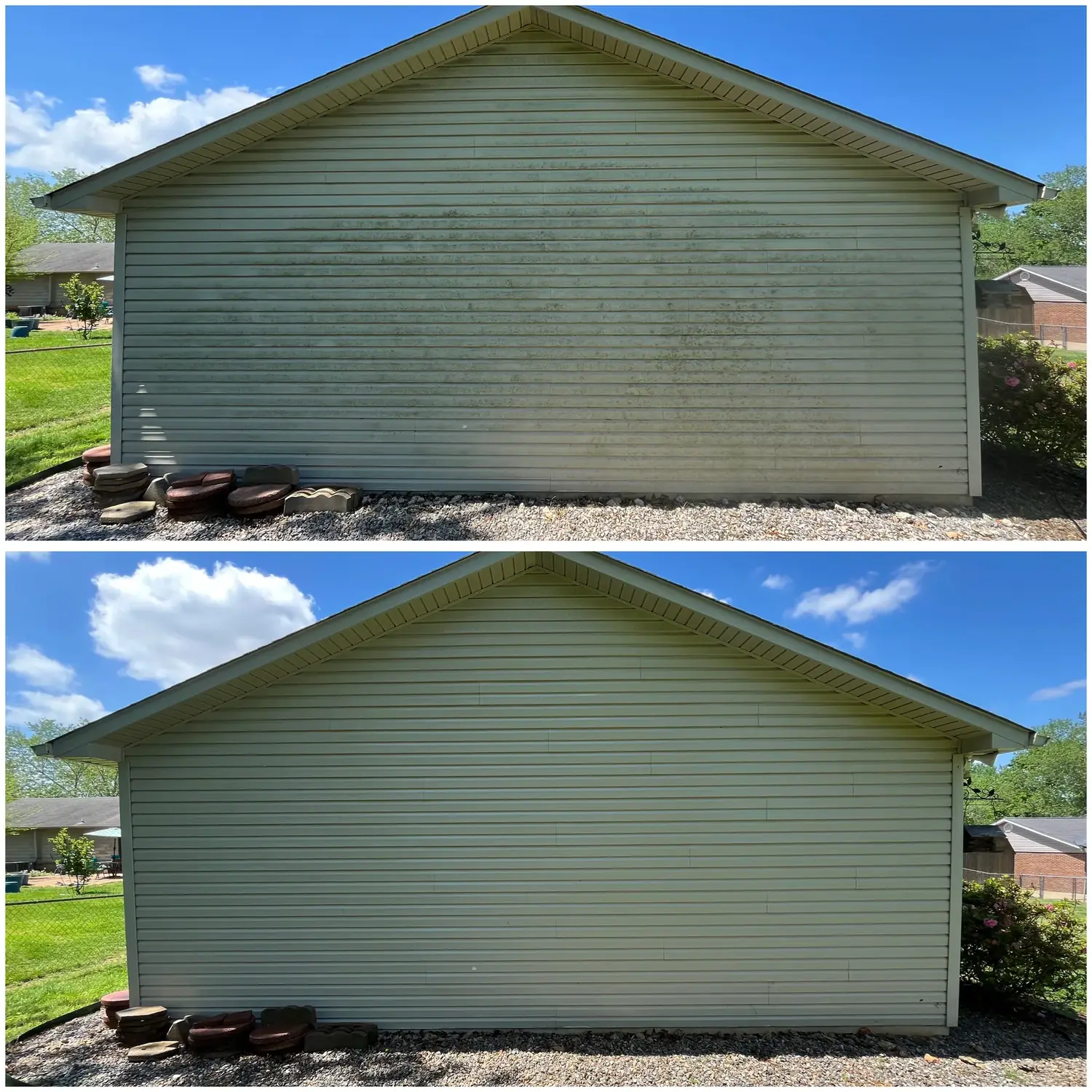
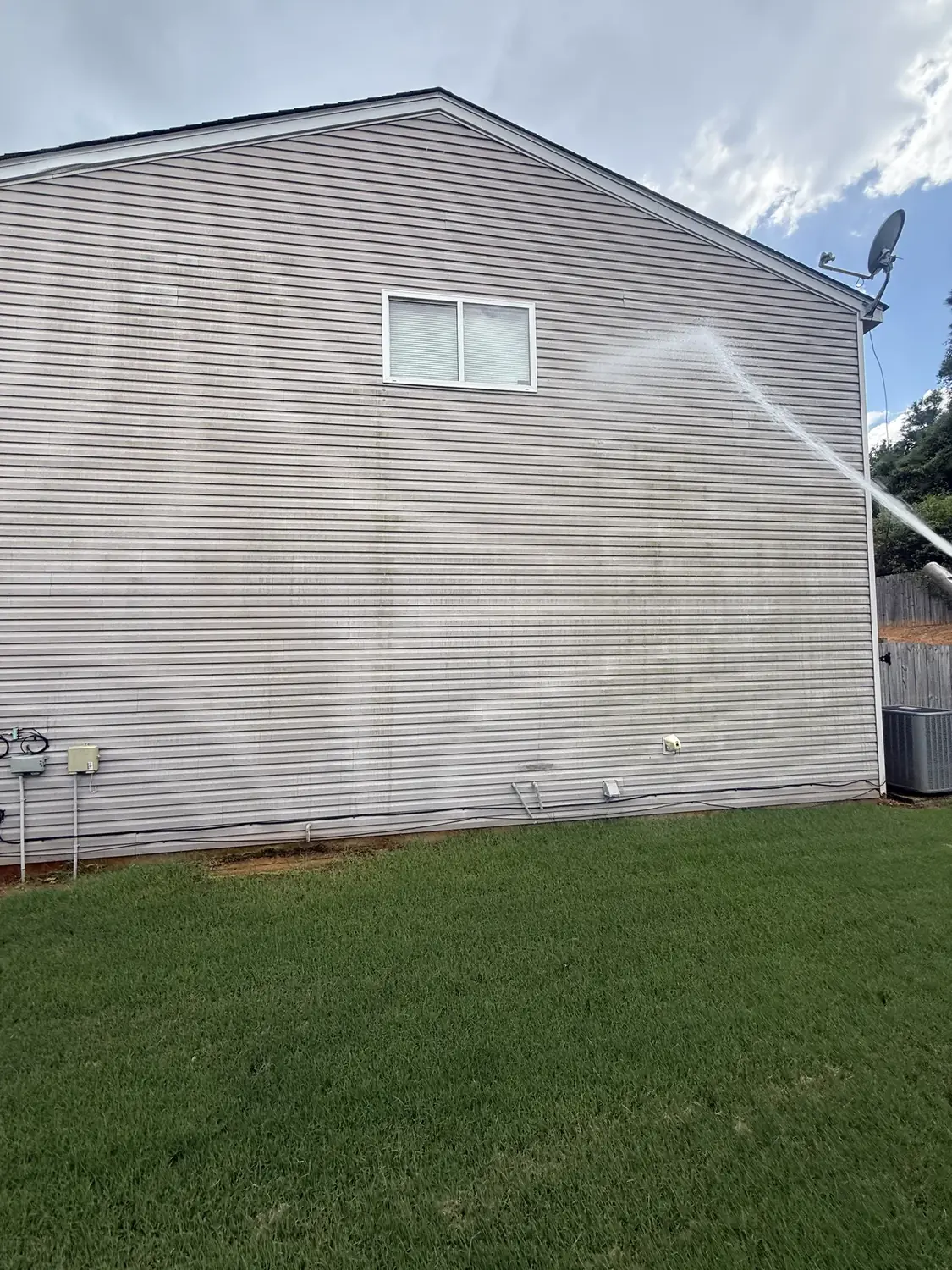
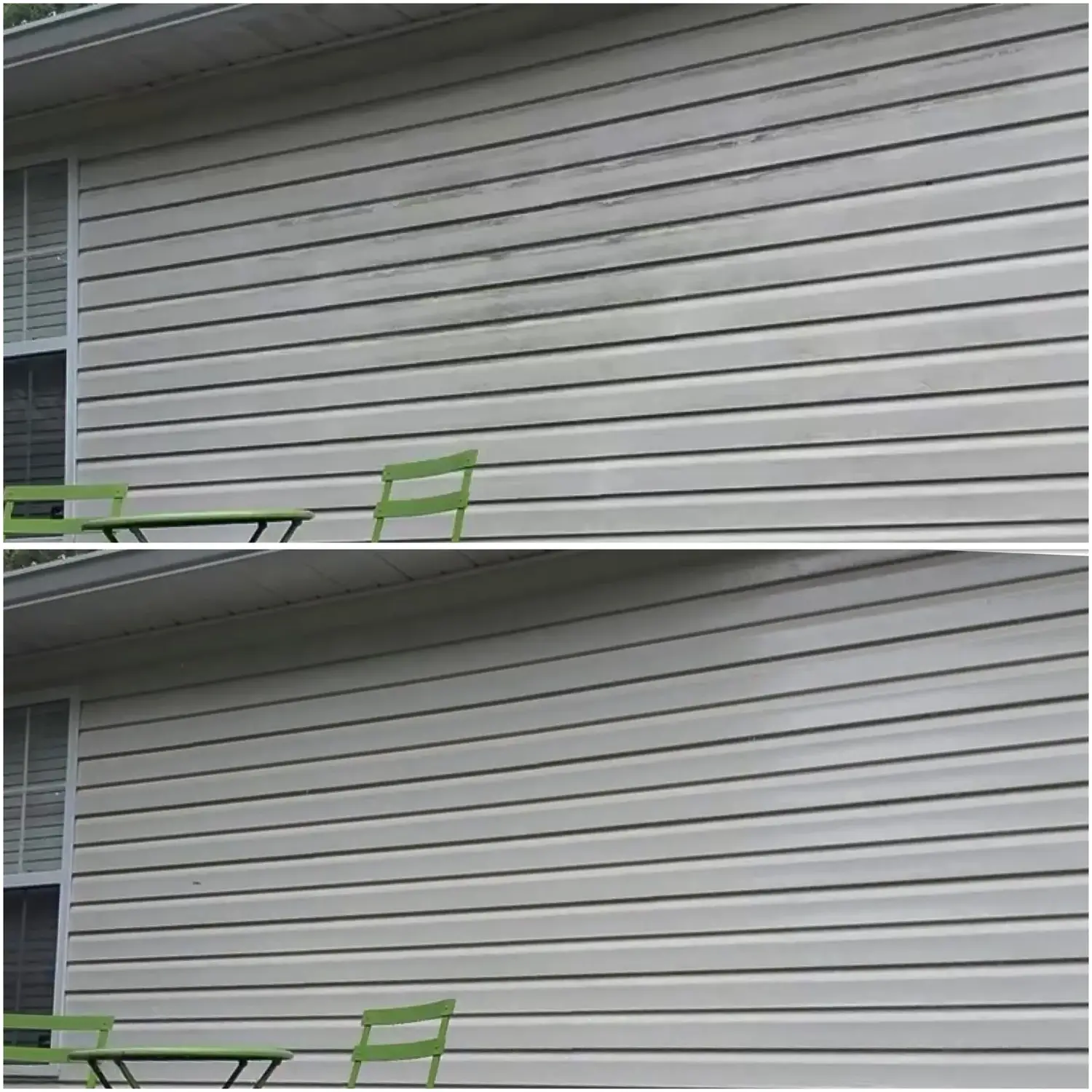
A pressure washer solves a mechanical problem: it removes material with force. That is the right tool for concrete. Siding does not have a dirt problem — it has a biology problem. The film on your walls is living algae, mildew and lichen with root structures inside the texture of the surface. Force knocks off the pigmented top layer, so the wall looks clean for a season while the colony is still there and growing back.
Soft washing inverts the ratio. Pressure drops to roughly what a garden hose delivers, and the work is done by chemistry: a metered sodium hypochlorite blend with surfactants that cling to vertical surfaces long enough to dwell. The solution kills the organism, the surfactant releases the dead material, and a low-pressure rinse carries it away. What is left is a surface that is biologically clean, not just visually clean.
The failure modes of high pressure on siding are worth naming. Water driven up under a vinyl lap has nowhere to go but the sheathing behind it, where it sits against house wrap and framing. Pressure at a window frame passes the weep system and shows up on interior sills days later. Painted wood loses adhesion and starts peeling in sheets the following summer. Oxidized vinyl gets stripped unevenly, leaving a blotchy panel that no amount of re-washing fixes.
Why North Alabama siding turns green and black
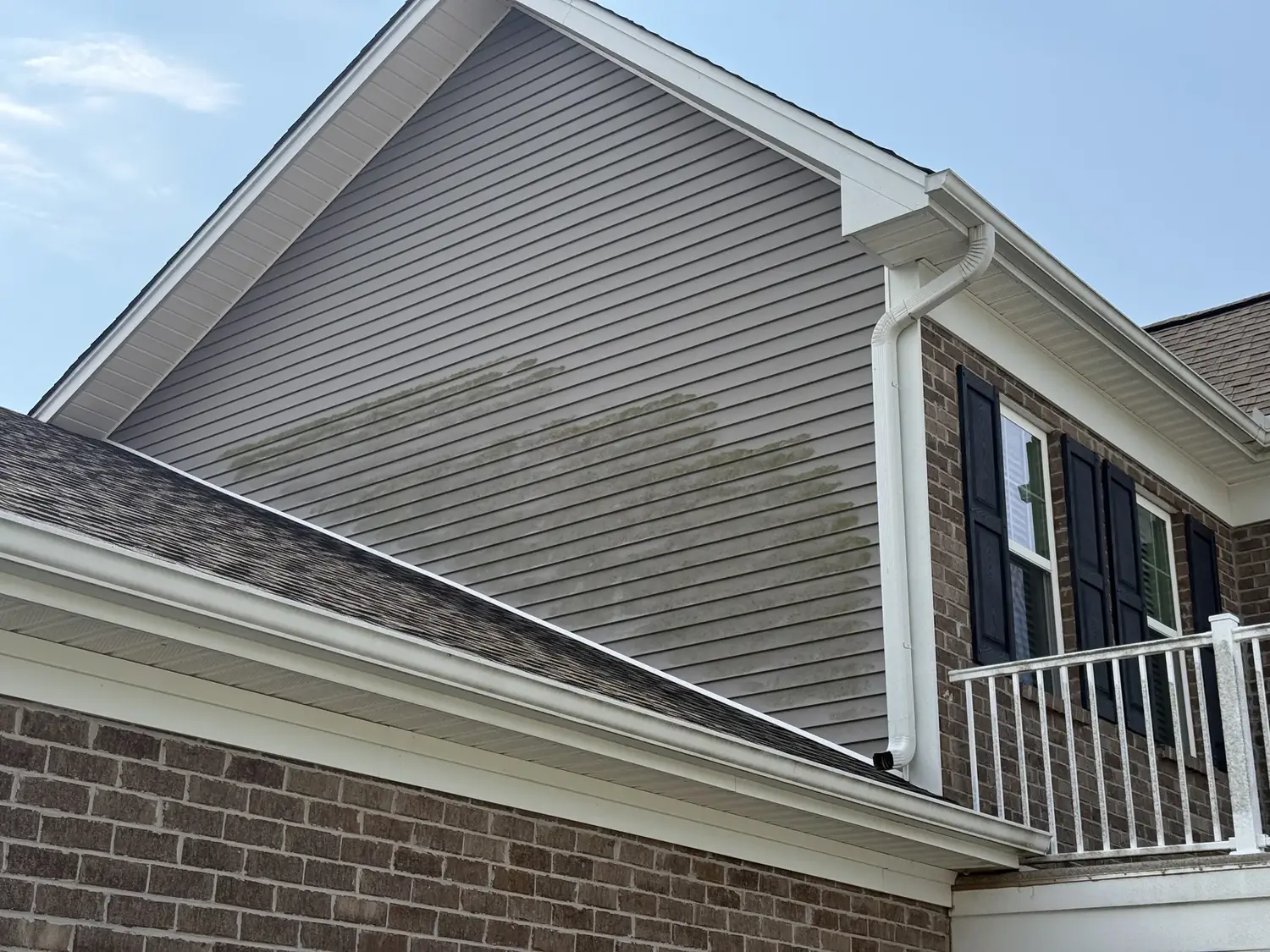
Huntsville sits in a humid subtropical valley: long muggy summers, mild wet winters, heavy tree canopy and dew that lingers on shaded walls until mid-morning. That is close to ideal for Gloeocapsa magma and common mildew species. Add pollen, red clay dust and exhaust particulate as a food source, and organic growth becomes the default state of any wall that stays damp.
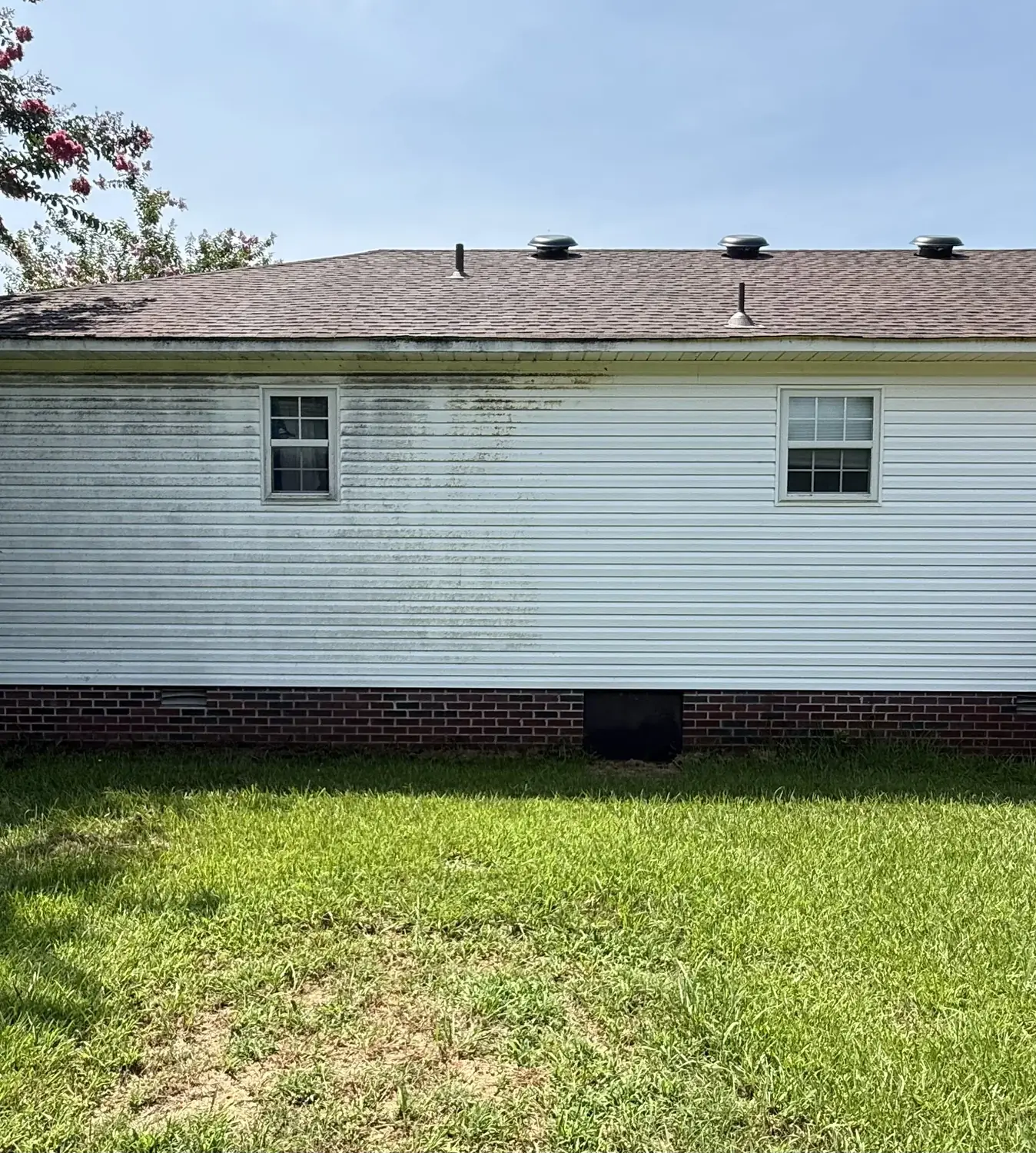
Patterns tell you what you are dealing with. Uniform green on a north or east wall is algae. Dark speckling under the eave line, or streaks below gutter seams, is mildew fed by chronic moisture — often a gutter problem, not a siding problem. Crusty grey-green patches that resist a thumbnail are lichen and need longer dwell time. Vertical rust-brown runs below window corners are usually irrigation overspray or fastener bleed and need a separate treatment.
Every substrate gets a different approach
Vinyl siding
The most common exterior in Madison and Huntsville subdivisions, and the most forgiving. We work bottom to top with the solution, top to bottom with the rinse, and never spray upward into the laps. Chalky, heavily oxidized vinyl gets tested in an inconspicuous area first — oxidation is degraded plastic, and no wash restores it. If your siding is chalking, we will tell you that cleaning will help but not make it look new.
Brick and mortar
Brick tolerates chemistry well but hates pressure at the joints. Older mortar in historic Huntsville neighborhoods is soft and sandy; high pressure blows it out and you inherit a repointing bill. We keep pressure low, focus on dwell time, and pre-wet foundation plantings heavily because brick sheds a lot of rinse water at ground level.
Fiber cement (Hardie board)
Cleans easily and holds paint well, but cut edges and butt joints are absorbent if they were never sealed. We avoid saturating joints and keep the wand well off the surface. Trim boards get the same low-pressure treatment as the field.
Stucco and EIFS
Porous and unforgiving. Pressure chips the finish coat and forces water into the wall assembly — on EIFS, moisture that gets in does not readily get out. Stucco gets the lowest pressure we run, longer dwell, and a careful, complete rinse.
Painted and stained wood
Cedar, board-and-batten and older painted lap siding need a diluted mix and a light touch. Failing paint will come off — that is the paint, not the wash, and we point out any areas that are already lifting before we start so there is no argument afterward.
Plant and landscaping protection
Landscape damage on a soft wash job comes from one thing: undiluted solution sitting on dry foliage. Our routine is boring on purpose. Beds, shrubs and turf along the wall are saturated with clean water before any chemical goes up. Anything sensitive gets rinsed again mid-wash so nothing dries with residue on it, and the entire perimeter gets a final flush. Delicate specimens — Japanese maples, hydrangeas, new plantings — get tarped or hand-shielded. Outdoor furniture, grills, electrical outlets and light fixtures get moved or covered.
Our house washing process
Inspect and identify
Siding type, growth type, existing damage, failing caulk or paint, gutter overflow evidence, and any stain that needs separate chemistry. We photograph pre-existing issues.
Protect
Pre-wet all landscaping, cover fixtures and outlets, close-check windows and doors, move furniture clear of the wall.
Apply and dwell
Metered soft wash solution applied low to high so runoff never streaks a dry wall. Dwell time is watched, not guessed — too short leaves growth alive, too long risks the surface drying with product on it.
Detail work
Hand-brush lichen, spider webbing under eaves, wasp nests, door frames, shutters, downspout faces and heavy-traffic entry areas.
Rinse and final flush
Full low-pressure rinse top to bottom, glass rinsed so it does not dry spotted, landscaping and concrete flushed. Then a walk-around with you.
What to expect
A typical single-story house wash runs two to three hours; two-story homes with complex rooflines take longer. You do not need to be home. Expect a faint chlorine smell during the work that dissipates as things dry. Some staining is not organic — chalking, oxidation, artillery fungus spotting from mulch, and old paint failure will improve but not disappear, and we identify those before we quote rather than after we finish.
Two related jobs almost always come up during a house wash. If dark streaks run down your shingles, that is the same algae family working on your roof, and it needs a roof soft washing treatment rather than anything pressurized — cleaning the walls while leaving a colonized roof means spores wash back down onto fresh siding with every rain. And when we see mildew streaking directly under gutter seams, the real fix is gutter cleaning so overflow stops running down the wall. Homeowners doing a full exterior refresh usually add concrete pressure washing to the same visit.